 |
|
The Accountability Company
- Accountability
- Employee Engagement
- Professionalism
- Leadership Skills
- Multi-Generational Issues
7308 South Alton Way, Suite 2J
Dry Creek Business Park
Centennial, Colorado 80112
800.282.3374
  
|
|
|
|
| Featured Tool |
50 Activities for Developing People Skills
Improve interpersonal skills; enhance management performance; create effective teams; and improve communication within your organization!
Purchase Now!
|
|
|
|
|
Words of Wisdom
"Some favorite expressions of small children: “It’s not my fault...They made me do it... I forgot.” Some favorite expressions of adults: “It’s not my job... No one told me... It couldn’t be helped.” True freedom begins and ends with personal accountability."
- Dan Zadra
|
|
|
|
|
| Book Report |
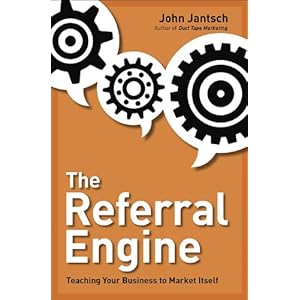
The Referral Engine: Teaching Your Business to Market Itself
The Referral Engine (Portfolio, 2010) by John Jantsch, of Duct Tape Marketing fame, provides a step-by-step referral-generating process. John Jantsch would like all of us to be able to say that we have not made a cold call in years. He gives readers the techniques to implement a self-generating referral system that can apply to any product or service located anywhere, and he supports them with actual scenarios of success. John Jantsch's writing style is warm and straight-talking. This title gets two thumbs up!
|
|
|
|
|
|
The Biggest Blind Spot in Almost Every Organization
 We have spent over 30 years working with organizations to help them develop the core skills that elicit the best performance and increased personal effectiveness from their employees. We have helped thousands of people become more accountable, productive and engaged in their workplace. We have spent over 30 years working with organizations to help them develop the core skills that elicit the best performance and increased personal effectiveness from their employees. We have helped thousands of people become more accountable, productive and engaged in their workplace.
Thank you for being part of the EDSI community!
Regards,
The EDSI Team |
|
 |
|
Mindful Managers Wanted!
 |
In your position, you may be responsible for one or even a team of mediocre middle managers. After reading this article, you may even classify yourself as one of them.
So, what defines the mediocre middle manager? They are the managers who get the work done but don't think beyond what has to be completed in the short term. They rush from one task to another, always working hard and with good intentions, but in the long run, they fail to consider what’s most important to their company’s larger objectives. Although they may be dependable when it comes to short deadlines and heavy workloads, they add little value to their organization or the functions and people they manage.
Then there are mindful middle managers. They see the big picture. They know how to manage operational practices with an eye toward organizational initiatives, elevating their position from middleman to key player.
Here are some examples of what you can expect from the mindful middle manager:
- Ownership – They assume direct responsibility for outcomes, taking the initiative to make things better; versus simply acting as a custodian to a project or process.
- Being active – They take the initiative to get things done and aren't deterred by setbacks.
- Generating – They are able to generate new and better versus getting stuck on how things are done now.
- Influencing through enrollment – They are able to demonstrate and convey a plan in such a way that others see and take on the vision for themselves.
- Practicing quality dialogue – They communicate with the intent of making a difference or moving a topic forward.
Mindful middle managers are driven to make things better. They're proactive and alert to the obstacle course they face as they help everyone move ahead.
|
|
|
|
|
|
Accountability and Response-Ability
 |
Are you fostering an accountability-based team, department, or organization? Accountability takes a step beyond responsibility. Responsibility is a felt obligation to act within an organization's values, whereas accountability adds that you can be called to answer for your own actions.
In an accountability-based organization, the onus is not only on direct reports (and their reports) to be accountable, but also on managers and executives to produce a culture that fosters accountability in its employees. This can be scary at first, but will pay off in the long run. So, how do you get started? By taking the time and effort to provide a combination of clear, specific, measurable goals for your direct reports and the tools, time, support and training to go along with those goals.
Here are some specific attributes of an accountability-based culture:
- People understand what they and others are accountable for and are called to account if they don't meet expectations– there are consequences. Therefore, managers work with their direct reports to define clearly what the direct reports can and cannot do.
- People understand their own and others' boundaries and decision-making authority; at the same time, managers encourage their direct reports to exercise discretion and creativity within the defined boundaries.
- Managers are aware of the current and future potential capability of employees and provide appropriate career development and mentoring to help them reach their potential.
- People are given enough decision-making authority to carry out their work.
- All employees understand how their own goals help the company achieve its strategy.
Essentially, in an accountability-based company, everyone knows what's expected of them and by when; regardless of whether they are sitting in the staff or management section of the stadium. Clear expectations and accountable results give us all a better sense of direction. In the words of Stephen Covey: "Accountability breeds response-ability."
|
|
|
|
|
|
Situation Room: Feedback in a Defensive Setting
Janis is a network engineer who joined the organization a few months ago. She has missed the mark in numerous technical aspects, which indicates that she doesn't understand her work and the system she is (supposedly) responsible for.
You are her manager, and you have been fielding complaint calls from your client and from Janis's colleagues. Yesterday you tried to give her constructive feedback, but she reacted defensively. The two of you exchanged words, and you ended up criticizing her work more broadly than you had intended to. Now Janis is upset and angry. She may even quit.
What would you do?
|
|
|
|
|
|
Author Interview: Steve Kaye
 |
Our interview this time is with Steve Kaye, author of three books on successful meetings and hundreds of business articles. Steve also holds a PhD in Chemical Engineering, and is a facilitator and speaker, spreading the word about the value of successful meetings.
What kinds of shifts in mindset have you witnessed in the last few years, with regard to how we all do business?
We are moving into an entirely different type of business climate. This is in part from the twitches in the economy, but more than just people not buying things. There is a general recognition of finite resources and importance of sustainable operations.
Here is a small example: My local grocery store uses 19 Billion plastic bags every year, and the management is requesting that customers consider using recyclable bags. What if they got rid of those plastic bags entirely, or even by half? Then the people who make the bags would go out of business. This is a good example of a tiny shift in consumer habits that can profoundly affect a whole industry.
In all of your years of experience, what do you find fosters the most effective leaders?
In general, the people who are courageous, and those are the leaders who welcome learning. They schedule workshops, read more, and spend time deliberately thinking; developing themselves and their people.
Okay, but even great leaders are affected by budgetary constraints, right?
Yes, because top decision makers cut training budget first. This results in stumbling along with the skill set that got them into the situation they are in, leaving top talent unhappy, since they realize that the organization is not going to invest in their development. In turn, they take flight as soon as the economy begins to turn. It results in a "talent defection." My forecast is that innovative companies (that value learning) will make greater progress than those who don't.
What do you see as the most critical talent for emerging leaders?
Although the business environment has changed over the years, my answer to that question remains the same: Communication. Leaders must communicate often, effectively and respectfully. That takes time and courage, because it includes telling people the truth and ensuring successful communication with everyone involved.
Thanks for your time, Steve. When Steve Kaye is not writing or facilitating, he can be found doing nature photography and spending time with his wife.
|
|
|
|
|
 |
Featured Tool |
 |
|
50 Activities for Developing People Skills
The objective of this activity-packed training solution is to help your employees:
-Improve interpersonal skills
-Enhance management performance
-Create effective teams
-Improve communication within your organization
It includes activities to address all the key people skills your managers need, including:
-Assertiveness
-Presentation
-Counseling
-Teamwork
-Verbal communication
-Listening
-Nonverbal communication
|
|
|
|
|








 Get inspired by the latest EDSI videocasts!


 del.icio.us
 Digg
Digg reddit
 Facebook
 StumbleUpon
 Twitter
 MySpace