Classical Conferences and Meetings in 2011 |
The 46th International Congress on Medieval Studies
May 12–15, 2011
Western Michigan University
Kalamazoo, MI
Representatives: Betty Brendel and Adam Velez
ACL - American Classical League
64th Annual Institute
June 25–27, 2011
University of Minnesota
Radisson University Hotel
Minneapolis, MN
Representatives: Drs. Lou and Marie Bolchazy, other BC attendees: Jody Cull, Laurel DeVries, and Don Sprague
-
Panel: Sun., June 26 - "The Riches of Neo-Latin: Why Don't We Use Them?" Milena Minkova, Terence Tunberg, Rose Williams
-
Panel: Sun., June 26 - "Effective Secondary Latin Materials" — Rose Williams, Panel Chair
"An Efficient Oral Component in Secondary Latin" Terence Tunberg
"Grammar in the Secondary Latin Program" Milena Minkova
"A Well Rounded Latin III Text" Helena Dettmer
"Electronic Components for the Secondary Latin Program" Donald Sprague
"Enrichment Texts Both Grammatical and Cultural" Rose Williams
- Talk: Sun., June 26 - "Conquering and Creating Gaul: Caesar's Use of Geographical Description in the Bellum Gallicum" Debra Nousek
National Junior Classical League Annual Convention
July 25–30, 2011
Eastern Kentucky University
Richmond KY
Representative: Allan Bolchazy
ICC—Illinois Classical Conference
October 7–9
University of Illinois
Champaign-Urbana, IL
Representative: TBD
CAAS—Classical Association of the Atlantic States
October 13–15
Baltimore Marriott Hunt Valley
Hunt Valley, MD
Representative: Don Sprague
Other 2011 meetings will be announced in a future issue.
Information taken from www.BOLCHAZY.com |
|
 |
|
Interesting Tidbits to Share |
The February issue of Canens, CANE's newsletter, prompts my sharing this tidbit. Many of us have heard of the legendary Reggie, Father Reginald Foster, who served several decades as the Pope's Latin secretary and who drew many Latin teachers to Rome each summer for memorable classes in Latin. Milwaukee's Fox 6 News did a special feature on Father Reggie who is now living in Milwaukee and teaching students at the University of Wisconsin at Milwaukee. To check out this insightful profile of Reginald Foster as man, priest, and Latin teacher. (click to see profile)
Note: Michael Lowe, the Fox 6 newscaster, studied four years of Latin at Loyola Academy in Wilmette, Illinois. Subsequent to his graduation, Michael's dad, William (PhD, Brown University) joined the classics faculty at the Academy.
Attending ACL this June? Be sure to attend Reginald Foster's special assembly session entitled Lingua Latina Nobis Conservanda est—NUNC! on Sunday, June 26.
Thought folks might find this piece from the February 6, 2011 Ask Marilyn column in Parade Magazine of interest.
How did Latin become a “dead” language?
—Abigail Woodbury, Brookline, Mass.
Many people would say that Latin is alive in the form of French, Italian, Portuguese, and Spanish, which were once its dialects. Nevertheless, it is called dead because it’s no longer anyone’s native tongue. As the Roman Empire declined, the dialects became languages of their own. However, today Latin itself is experiencing a surge of popularity in schools. One reason could be J.K. Rowling’s Harry Potter series, which is full of Latin spells. Now it’s the language of magic.
(Printed here with permission from Parade Magazine.)
Perhaps you'd want to share your thoughts about Latin as "a dead language" with Marilyn? For others' comments and to share your own: Ask Marilyn
|
|
|
|
Tuesday, May 3
6:00–7:00 PM EST
Latin and Roman Ideals in the Hispanic New World
Rose Williams, veteran classics teacher and best-selling B-C author (the LNM history and mythology enrichment texts among many others), discusses the influence of Rome in the New World and the rich Hispanic heritage of literature written in Latin. This cultural background is a great complement to Latin for the New Millennium, Level 2 and its readings from Thomas More and Sepúlveda.
Tuesday, May 10
6:00–6:45 PM EST
Maximizing the Resources of the LNM Teachers’ Lounge
Latin for the New Millennium editor Don Sprague and Bolchazy-Carducci Production and eLearning Product Manager Jody Cull team up to give an introduction to and overview of the Latin for the New Millennium Teachers’ Lounge.
This webinar will familiarize teachers new to Latin for the New Millennium with the Teachers’ Lounge and for those more familiar with this teaching resource will provide tips on how to maximize the resources of the Teachers’ Lounge.
Tuesday, May 24
6:00–7:30 PM EST
Latin for the New Millennium Overview
LNM Editor Donald Sprague leads participants through a visual tour of the pedagogical principles and the features of Latin for the New Millennium Levels 1 and 2 and provides a preview of Level 3.
This presentation is ideal for those wishing to learn more about Latin for the New Millennium and considering its adoption for their school or classes.
Tuesday, June 7, 2011
6:30-8:00 EST
The Aural/oral Components of the Latin for the New Millennium Series
Latin for the New Millennium coauthors Milena Minkova and Terence Tunberg, celebrated neoLatinist and Conventicula Latina directors, discuss the aural/oral components of the series. Drs. Minkova and Tunberg will address such issues as how best to incorporate oral Latin in your LNM classroom. They will also demonstrate some of the oral activities delineated in the LNM Teacher's Manuals.
- Participation is free. All webinars provide an opportunity for participants to ask questions.
- Learn lots—attend each presentation. We’re happy to provide documentation of your participation for your supervisor(s).
- All you need to participate in these webinars is high-speed Internet access, computer speakers/ headphones, and your access code, which we will provide to you once you register.
For more information about and to register for free webinars click here |
|
|
|
Special Summer Professional Growth Opportunities |
Summer is a great time for teachers to enhance their own skills and knowledge. If you're not going to join us on the Latin Teachers Tour, we recommend your considering the following opportunities offered by our authors and collaborators.
Latin for the New Millennium authors Terry Tunberg and Milena Minkova, renowned sponsors of Latin conventicula will be conducting a session at Dickinson College, July 5–11, and, at their home base in Lexington at the University of Kentucky, the 15th anniversary conventiculum, July 21–29.
Following the conventiculum at Dickinson, Professors Francese and Reedy will lead a five-day, July 13–17 reading of Tacitus' Germania.
Jacqueline Carlon and her colleagues at UMass Boston will present Conventiculum Bostoniense: Latin by the Sea at UMass Dartmouth, July 30–August 7.
For more information on each of these download this informational pdf.
Author of B-C Caesar texts for the new AP curriculum, Hans-Friedrich Mueller is offering a graduate course in Caesar: CLS 660 Julius Caesar in his Time: The General as Historian. The course will be conducted online and run from June 21–August 5, 2011 through Union Graduate College. Hans is an engaging instructor with a deep passion for Caesar. Download the informational pdf. |
|
|
|
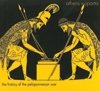
High school Latin teachers are always eager to include as much of the ancient world in their classes. The indie rock CD Athens v. Sparta affords teachers a condensed yet most compelling way to present the famous Peloponnesian War to their students. Charlie Roadman, armed with his BA in history from Trinity University, Texas, collaborating with this three classmates from Trinity and their "classicist rock" band Athens v. Sparta, presents the history of the Peloponnesian War through the narratives of Thucydides and Xenophon punctuated by their rock compositions. Narrator Ken Webster has the perfect voice for providing historical commentary and the sixteen musicians and three vocalists punctuate the narrative with haunting, sometimes humorous, and always enjoyable original lyrics and music.
Check it out! The first link, Epidamnus from the first track, sets the context of the war and the full album. The second link, track seven, recounts the story of the Melian Dialogue.
Track One
Track Seven
|
|
|
|
Bolchazy-Carducci textbooks are now available through Google and Xplana eBookstores, with more titles going digital every day! Each eBook offers a variety of tools to enhance the learning process, and eBook distributors are continually adding new features.
What do BC eBooks currently offer?
eBooks have the same content as our traditional books in print, with these enhancements:
• Searchable
• Adjust text size, typeface, line space
• Free samples of books
• Worry-free archive
• Available on any computer with an internet connection
• Readable on:
- the web (via Windows or MAC computers)
- iPhone, iPad and iPod touch
- Android
- eBook Devices: Barnes & Noble Nook and Reader™ from Sony
Google ebook information: http://books.google.com/help/ebooks/overview.html
Google ebook store: http://books.google.com/ebooks
• Searchable
• Adjust text size, typeface, line space
•Add notes, customized highlights, and other annotations—all of which are added to the embedded annotation manager for convenient access
• Worry-free archive
• Available on any computer with an internet connection
• Readable on:
- the web (via Windows or MAC computers)
- tablet computers (any device that is Flash compatible)
Xplana ebook information: http://tinyurl.com/4qlyhye
Xplana ebook store: http://shop.xplana.com/
How do I purchase a BC eBook?
Simple! When you are browsing through www.Bolchazy.com, any time you see Google or Xplana eBook logo, click on the logo, and you will automatically be directed to a webpage where you can purchase the eBook.
Can I purchase direct from the distributor?
Yes! If you prefer, you can link directly to our eBook providers’ websites and search by title, by author, or by Bolchazy-Carducci Publishers to locate the title you would like to purchase. The Google eBooks store offers a preview of the book, including the table of contents and select pages.
What hardware is required?
You can read eBooks on a Mac, PC, iPhone, iPad, Android, or a variety of eReaders. |
|
|
|
Illinois Classical Conference |
|
ICC President and LNM 3 Consultant Becki Wick invites all Illinois classics teachers and colleagues from neighboring states to the upcoming annual meeting of the Illlinois Classical Conference hosted by the University of Illlinois, Champaign-Urbana, IL, October 7–9.
ICC has lined up Professor Lothar Haselberger, an architectural historian at the University of Pennsylvania, to give the keynote address on Saturday after lunch. Haselberger's specialties include the Temple of Apollo at Didyma and Augustan architecture with an emphasis on the Pantheon. |
|
|
Bolchazy-Carducci
Links of Interest |
Free Bolchazy-Carducci Roman Calendar
Be sure to place your name on the mailing list for Bolchazy-Carducci’s annual school year calendar. We are out of the printed copies but the current calendar is available to download from our website.
2010-2011 Roman Calendar
Preview Bolchazy-Carducci Titles
Preview Bolchazy-Carducci titles before you buy using Google Preview.
Downloadable Products
iPodius - Bolchazy-Carducci Publishers online shop for: audio, software, video, and teacher created materials.
BCP Facebook Fan Page
Become a FAN of Bolchazy-Carducci Publishers, visit our Facebook Fan page for the latest news from BCP. |
|
|
|
|
From the Editor
Spring Musings |
Dear Colleagues and Friends,
We teachers certainly crave spring with its warm weather, flowers, and the opportunity to take a break from days jam-packed with the activities, duties, and responsibilities of the classroom. And, for many of us, spring signals an end to all that snow. While attending CANE this past month, the shuttle driver at Bradley International Airport bemoaned a winter with 88 inches of snow while a former student living farther north in western Massachusetts rued some 120 inches in his town! However, the gods smiled and made the Friday of the CANE conference a shirt-sleeve kind of day. The week following the conference saw New England battered with yet another blast of snow.
I trust your spring break brought you some much needed rest and relaxation so that you've returned to class eager to end on a high note! I'm looking forward to break beginning on the 18th—City Colleges of Chicago follows the Chicago Public Schools, which always schedules spring break the week prior to Easter. It's been a long haul and I look forward to a little breather. If you're still awaiting the break, I know how you're feeling. And, let's hope the traditional April vacation for our friends in New England rewards them with seven consecutive days of sunshine and warmth.
This April issue concludes our trilogy of interviews with the authors of our upcoming Caesar texts. Professor Nousek's enthusiasm for Caesar jumps off the page at you.
This talented triumvirate of Latinists—Hans Mueller, Debra Nousek, and Rose Williams—has been working hard to provide your students with the resources for Caesar that you have come to expect from Bolchazy-Carducci—a primary text with appropriate vocabulary, ample grammar and syntax as well as historical and literary notes, background essays, a bibliography, and a glossary—a Workbook that provides a range of AP*-like exercises that give students practice with all aspects of the AP* Caesar syllabus: content, translation, grammar, syntax, vocabulary, figures of speech, and literary analysis—a LEGAMUS Transitional Reader that assists students' transition to unadapted Latin and/or eases the return to classes from summer vacation and its retention loss.
You'll find our other regular features in this issue of eLitterae as well as the addition of a new feature. At the suggestion of B-C senior editor Laurie Keenan, each issue of eLitterae will now feature a focus on one of our B-C audio products. So, learn about the indie rock album, Athens v. Sparta. Enjoy listening to two of its tracks. I'm sure you'll like it.
Lastly, with spring break behind us or just before us, summer can't be too far off. We're finalizing plans for our Latin Teachers Tour and would love to have you come along on this exploration of Cisalpine and Transalpine Gaul. Act fast! Also check out the conventicula being offered this summer. For those looking to enhance their Caesar knowledge, we recommend Hans Mueller's online graduate course being offered this summer.
All best,
Don Sprague |
|
|
|
An eLitterae Email Interview with Debra Nousek, A Caesar Workbook Coauthor |
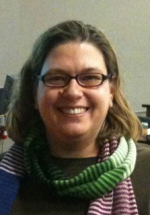
DES: What attracted you to the current Bolchazy-Carducci A Caesar Workbook project?
DN: Having been working with Caesar pretty much constantly for the last twelve years, I was excited to learn that the College Board had decided to include Caesar’s works in the AP* curriculum. When I was asked to contribute to the Workbook project, I found a welcome and inviting environment, where everyone at B-C shared my enthusiasm for Caesar. I also really liked the idea of collaborating with the prolific and legendary Rose Williams, who could help me get a better sense of the AP format, and what high school teachers would need.
DES: Which of your scholarly projects and publications bring you the greatest sense of accomplishment?
DN: It’s not too long ago that my first article (on Caesarian coinage) appeared in print, and I still get a tiny thrill seeing my name on the pages of a journal. But I’d have to say that my sense of accomplishment is still developing: I’m most excited about the two projects I’m currently working on, a monograph about Caesar’s contribution to literary historiography, and the Caesar Workbook project. The monograph (more on this below) will be the culmination of my decade-long study of the Commentarii and the Workbook will (I hope) offer practical support in the classroom for reading and enjoying Caesar’s prose.
DES: Did you read Caesar as part of your high school Latin program? What do you recall of the experience?
DN: Most Canadian high schools, at least where and when I was growing up, didn’t offer Latin, so I wasn’t exposed to Latin until university. I did have an extraordinary teacher for IB English, though, and through him I discovered a passion for literature. When I started university I enrolled in an introductory survey in Comparative Literature, where we read Homer and Vergil in the first few weeks of the semester. I was hooked. In fact, I can still vividly recall announcing to my professor that I wanted to major in Comp Lit, with Greek and Latin as my languages. He accepted this with a chuckle and replied, “you know, there’s a whole department for that . . . ” and the rest is, well, history. Some of the features of Latin that I like best are its compactness and the flexible word order, though I recognize that these are probably some of the aspects that frustrate students the most. And it might be a cliché for a Caesar scholar, but I really do love the ablative absolute.
DES: Why do you think studying Caesar is relevant for today's high school (and college) students?
DN: The first reason is simply Caesar’s status as one of the most enduring figures from ancient Rome. If you mention Julius Caesar to anyone, very few won’t have heard of him. Secondly, I think his military, political, and literary genius really leaps off the page: even though the Commentarii are a literary creation, Caesar writes in a way that brings the reader right into the heat of the battle. In the Commentarii we get the thoughts and ideas of one of Rome’s greatest generals and intellectuals, expressed vividly and concisely. It’s a firsthand look into Caesar’s self-presentation. And finally, the Gallic War is, to me, an adventure story: imagine Caesar the Roman politician, having reached the pinnacle of his political career, setting off into Gaul to make his reputation as a military man. With the shadow of his uncle Gaius Marius looming in the background and Pompey’s recent triumphant exploits over the pirates and in the east full in the spotlight, Caesar had to accomplish something really spectacular. And he did: not only did he create the famous tres partes of Gaul (there were only two Gallic provinces before Caesar), but he extended the boundaries of the known world by crossing into Britain and venturing across the Rhine. When I read the Gallic War, these elements stand out in the narrative just as much as the conquest of territory and tribes. If students can see beyond the battles to the larger motivation for Caesar to establish his place in the world, I think they'll see that this is an issue with which people of all ages and all eras struggle to deal.
DES: You're working on a monograph about Caesar. Would you share with us what you’ve come up with?
DN: I’d be happy to! My study examines the Caesarian corpus as a whole—that is, not just the Gallic War and the Civil War, but also the accounts written by unknown authors that complete the narrative of the civil war after Caesar’s own text leaves off soon after he arrived in Alexandria. My aim is to show that Caesar, as an accomplished intellectual, was engaged in the literary and stylistic debates that were ongoing in the 50s BCE, and that the particular form of the Bellum Gallicum was composed as a response to Cicero’s own musings about the best form and style for Roman historiography. Cicero desperately wanted someone to write a history of his own annus mirabilis, his consulship and suppression of the Catilinarian conspiracy, but wasn’t able to find anyone to undertake the task. He says that he would write it up himself, except that he doesn’t want to deal with the twin problems of, on the one hand, seeming to brag too much or, on the opposite end, underselling his accomplishments. I argue that Caesar tried to show that a man could compose his own history, and that he negotiated the self-promotional challenge by creating a third-person character, “Caesar,” who is distinct from the author called Caesar. In the second half of the book I show how Caesar and his continuators developed Latin historiography, and more specifically, the form of the historical monograph, a focused narrative of a specific event rather than the traditional history of Rome from its beginnings.
(For the rest of Dr. Nousek's interview, check out the May eLitterae.)
Professor Nousek teaches at Western Ontario University in Canada. She earned her BA at the University of Alberta, her MA at the University of California at Santa Barbara, and her PhD from Rutgers University. Professor Nousek is a specialist in Roman history and the republic and has published on Caesar as well as delivered papers on a variety of topics including Caesar. A Caesar devotee, even her teaching webpage begins with an image from the Gallic War, see http://publish.uwo.ca/~dnousek/. At Western Ontario, she was named to the Teaching Honor Roll through the University Students' Council.
Check out Professor Nousek's ACL talk, see Conference Listings. |
|
|
|
Spring Special Discount for eLitterae Subscribers |
Ideal for Vergil Review Teaching Tips Provided
Bolchazy-Carducci Publishers is offering 40% off
Poet and Artist: Imaging the Aeneid.
This is a perfect text for teachers reviewing Vergil with students for the semester exam or for the AP* Vergil Examination. Poet and Artist: Imaging the Aeneid by Dr. Henry Bender and Dr. David Califf offers a terrific method for conducting the crucial end-of-semester review.
- Teachers can project the Ogilby plates of scenes from the Aeneid (the images accompanied John Dryden's celebrated translation of the Aeneid) as a means of reviewing key passages from the epic. Teachers ask the students to determine the subject matter of the image and recount what happens in that scene. Then, the teacher directs the class to the full Latin passage and asks for volunteers to paraphrase lines and/or translate some key lines.
- For sight passages, the images can serve as a pre-lection exercise with the teacher using the images as a prompt for thinking about the subject matter of the about-to-be deciphered sight passage.
- For classes that have engaged in close textual reading, the images provide an opportunity to use those close reading skills in a different way. Students analyze the image against the text and come with two sets of quotes and citations from the poem—those specifics in the poem that are presented visually in the image and those details that Ogilby chose not to include. This close reading activity works well with the small group format. Teachers will find the comprehension and interpretation questions Bender and Califf have provided helpful for their review work.
The CD provides the engravings from the Aeneid in PowerPoint™ and PDF format.
And, of course, now that you've purchased this marvelous resource, you can use it throughout your Vergil course next year!
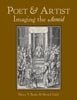
Poet and Artist: Imaging the Aeneid
Henry Bender and David Califf
xiv + 88 pp. + CD-ROM (2004) 6"x 9" paperback ISBN 978-0-86516-585-4 $39.00 $23.00
One copy, prepaid, no returns, not available to distributors.
Offer expires 05/15/11
Make sure to mention that you are an eLitterae subscriber if you place your order by phone or fax. If you place your order via www.BOLCHAZY.com the eLitterae sale price will be charged at checkout. |
|
|
|
Classical Association of New England Report |
The annual pilgrimage to New England is one of the highlights of my academic year as it provides an opportunity to reconnect with my roots and recharge the Boston accent as well as the opportunity to deepen friendships and ties with CANE friends and loyal B-C fans. Geoff Sumi welcomed us to Mount Holyoke College and proved to be the consummate host. Wielding a two-wheeler to help move the cartons of B-C books, Geoff could not have been more helpful.
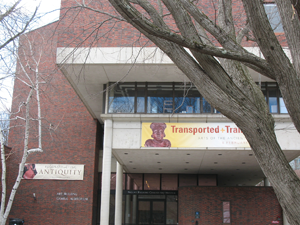
Mount Holyoke College Art Museum
Mount Holyoke, founded in 1837 as the first institution of higher learning in the world for women, hosted CANE's 105th Annual Meeting, March 18–19, and attracted some 210 attendees to this idyllic small college setting. The meeting coincided with a special exhibit of Greek and Roman materials at the Mount Holyoke College Art Museum. Many a classics teacher has, I'm sure, thought if only those materials in storage were displayed at my school or wouldn't it be cool if those objects could be loaned to our local museum. Yale University read such minds and, with Mellon Foundation support, has shared some 70 representative Greek and Roman artifacts for a special exhibit Reconstructing Antiquity at Mount Holyoke. Some 36 CANE attendees enjoyed a gallery talk and tour of the exhibit with Professor Rebecca Sinos of Amherst College, who had in the fall given the opening lecture. After packing up the B-C display Saturday afternoon, your author thoroughly enjoyed touring the exhibit as well as the other galleries of the museum. What a fantastic resource the museum is for the college's art history and classics programs! Art history and classics undergrads enthused about the opportunity to work on the Reconstructing Antiquity exhibit.
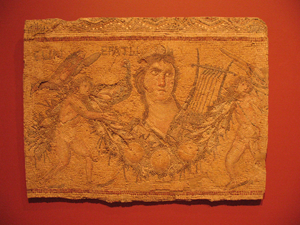
A mosaic of the muse Erato, the goddess of lyric poetry.
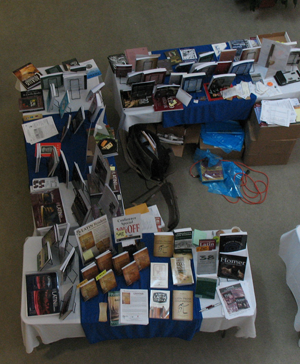
Bird's eye view of Bolchazy-Carducci CANE conference display.
The book display was located in the atrium of a science building. Participants passed through the exhibits en route to one of the lecture rooms for the conference. Each day's coffee breaks with heaping supplies of goodies was held in the atrium as well. This meant for a steady flow of classicists who checked out the Cicero LEGAMUS, new titles in the B-C Readers Series, and the sell-out, A Roman Map Workbook and its teacher's manual. Many teachers inquired about Caesar texts and I delineated the triad of texts that are in the works and presented them with our Caesar text bookmark.
Friday afternoon I gave my presentation, "The City as Agent of Empire: Spain Mirrors Rome: An Illustrated Talk" in the auditorium of the art museum. The presentation demonstrated the influence of Roman city planning on the development of cities in the New World. Fortunately, the magnificent audiovisual system worked well. I had visions of a college visit to nearby Smith College where I was the slide clicker for my classics prof's lecture on Roman baths in southern Italy. The first slide became jammed in the projector. Luckily, we were in the faculty club and access to a cocktail fork saved the day. While time did not allow questions, I was gratified that several people sought me out to follow up on the presentation.
Friday culminated in a splendid banquet preceded by preprandial conviviality that bubbled over into dinner. From the "it's a small world" experience, my dinner companions included Jim Conlon of St. Michael's College in Vermont who earned his PhD at Loyola University Chicago and Brian Walsh of the University of Vermont. Brian and I share Brian Donaher as both our Greek teacher and mentor at Boston College High School. Donaher is in his 51st year teaching at BC High! For me, the highlight of the banquet is the presentation of the awards for outstanding teacher—CANE celebrated Margaret Cook of Winthrop High School (Maine), who has attended some 36 consecutive CANE meetings in the course of her exemplary career as high school Latin teacher, and Charlie Bradshaw whose exemplary service to CANE and his 45 years teaching high school Latin are inspirational.
Tim Joseph, College of the Holy Cross, treated me to lunch after the meeting's conclusion on Saturday. I ordered a corned beef sandwich as a belated bow to St. Patrick's Day. It was my pleasure to inform Tim that he and Caitlin Gillespie, who presented on her dissertation topic (University of Pennsylvania), were both alumni of Loyola Academy in Wilmette, IL. While doing his graduate work at Harvard, Tim had taught Caitlin elementary Greek four days a week but had not known the connection. Indeed, they were both four year Latin students (I had Tim in Latin 1, 3, and 4), had both been on the Loyola Classics Tour, and participated in the Honors Program I had directed. And, now they're both specialists in Tacitus! Small world, indeed.
So, in many ways, it was a delightful conference. Following my visit to the art museum, I topped off my Mount Holyoke experience with a visit to the college greenhouses which were hosting a beautiful display of spring flowers.
Public Service Announcement for CANE Members
A member of the CANE Discretionary Funds Committee informed me that those funds are available for a Latin teacher to acquire materials for the classroom. May I suggest a classroom set of the Roman Map Workbook, or Ed DeHoratius' Follow Your Fates series, a site license for Looking at Latin (a terrific resource of grammar review), or the seed money for adopting Latin for the New Millennium . . . ? |
|
|
|
Gearing up to review Vergil? Check out the discount special and teaching tips noted above.
Classical Architecture in the Community Project
Spring is the perfect time to give students a homework project that requires them to go out and explore their communities. Many Latin teachers present the grand architecture of the Romans and as often require their students to be able to identify the three classical orders—Doric, Ionic, Corinthian—as well as other architectural terms such as capital, metope, triglyph, and architrave. Students learn identify the order of a given classical temple or find a metope on a temple facade. Images are provided in the student's Latin book or through projections the teacher provides. If you have not yet presented such information to your classes, two 15–20 sessions with a day in between for students to study and review should suffice.
With a review of the orders and the components under their belts, students can now be assigned to explore their local community in search of buildings whose architecture reflects a classical heritage. Students must take photos of these classically influenced buildings.
- Six buildings altogether
- No more than one set of two buildings of the same type, e.g., two banks or two churches, etc.
- At least two of the six buildings should be residential, i.e., houses, apartment buildings, townhouses.
- Students must provide the following specifics for each building photographed:
- Identification, e.g., Ryerson Memorial Library
- Location, e.g., 1710 West Memorial Drive, downtown Oakville
- Building type if not included in the identification
- For the following, students must draw arrows identifying
- Classical order(s)
- Pertinent architectural components, e.g., metopes
Students can mount photographs and identifications on a traditional poster board for presentation to the class. Alternatively, students can create an online poster that can be shared electronically in class. Colleague Kelly Northrup of the Webb School in Bell Buckle, Tennessee, recommends using edu.glogster.com for making digital posters.
As students give their presentations, their classmates should create an inventory of the buildings presented by type. Then, at the conclusion of the presentations, ask students to analyze the data they have recorded in their inventories.
- What types of buildings were presented most frequently?
- What do those building types have in common besides their classical look?
- Why did the planners and architects choose a classical look for those buildings? What message did they want the classical look to communicate?
- Is there a different message communicated by residential buildings with classical elements?
- Which buildings were presented by multiple students? Why did that happen?
While the answers to these questions will be somewhat variable depending on the local community, banks/libraries/courthouses/city halls often boast classical elements as a deliberate reference to classical roots, to classical values, to tradition, etc.
Of course, it is always important to prepare a set of grading rubrics along with the date you expect to see the students’ plans or rough drafts and the date when the finished product is due. Sample point breakouts for this project would include points for meeting the criteria, the quality of the poster created, the accuracy of the identifications, correct spelling, the quality of the presentation to the class. A good resource for creating rubrics, as suggested by Elizabeth Heimbach in A Roman Map Workbook Teacher's Guide, is Rubistar.
Should you implement this project, please share your experience with me: don@bolchazy.com. |
|
|
|
Latin for the New Millennium Level 3 |
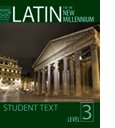 Work on Latin for the New Millennium Level 3 continues apace. Dr. John Traupman has worked his macron magic on the first two author units—Catullus and Cicero. Dr. Karrie Singh has created Teacher's Manual English derivative materials for all the Catullus poems. She is presently finishing up a set of questions teachers can use to quiz and test students' mastery of the derivatives. We Latin teachers know that Latin can significantly enhance and enlarge our students' English vocabulary provided we dedicate some classroom time to doing so. Work on Latin for the New Millennium Level 3 continues apace. Dr. John Traupman has worked his macron magic on the first two author units—Catullus and Cicero. Dr. Karrie Singh has created Teacher's Manual English derivative materials for all the Catullus poems. She is presently finishing up a set of questions teachers can use to quiz and test students' mastery of the derivatives. We Latin teachers know that Latin can significantly enhance and enlarge our students' English vocabulary provided we dedicate some classroom time to doing so.
The author-collating editors for LNM 3 have chosen six odes for the Horace unit and are hard at work tweaking the material for that unit. Just the other day, the Vergil unit's student version and teacher's manual version arrived in my email. Students introduced to Vergil through LNM 3 will be well prepared to do Advanced Placement* Vergil the following year. Latin for the New Millennium Level 3 includes the following significant passages from Vergil's Aeneid:
|
|
The Proem |
|
|
Aeneas marvels at Dido's city, the bee simile |
|
|
Laocoon attacked by the twin serpents |
|
|
Pyrrhus kills Priam |
|
|
Aeneas leads Anchises and Ascanius into exile |
|
|
Dido & Aeneas meet in the cave |
|
|
Dido and her funeral pyre |
|
|
Aeneas encounters an unforgiving Dido in the Underworld |
|
|
Anchises sets Rome's mission for Aeneas |
We've done an analysis of the vocabulary in LNM 1 & 2 and correlated it to those words appearing on Pharr's Vergilian vocabulary frequency list. LNM 1 & 2 introduce students to 80% of the words that appear 24 or more times in the first six books of the Aeneid. The overwhelming majority of these words are from LNM 1 & 2 Vocabulary to Know. In a future issue of eLitterae, we'll share more on this correlation analysis. With the addition of the Vergil unit in LNM 3, students will approach AP* Vergil with an even stronger vocabulary base. We also plan to do a correlation with those words appearing frequently in Caesar. Stay tuned! |
|
|
|
Latin for the New Millennium Teaching Tips |
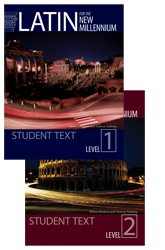
LNM introduces students to letter writing in Latin with Cicero's letter to Terentia in Level 1, Chapter 5 and an adaptation of Pliny's letter to Tacitus (Chapter 16). Level 2 presents Heloise's letter to Abelard (Chapter 3), Petrarch's letter to Cicero (Chapter 7) as well as two letters from Erasmus (Chapters 9 & 10). Having students write letters is an excellent way for students to demonstrate their understanding of the original Latin letter and to practice their own Latin composition skills. Teachers might consider the following possibilities:
Level 1 Spring Semester
Chapter 13: The boor writes a letter to his wife describing his encounter with Horace.
Chapter 14: An apocryphal suicide note written by Thisbe is found.
Chapter 16: Pliny the Younger writes to a friend about the death of his uncle and the eruption of Mt. Vesuvius.
Chapter 20: Augustine writes to the owner of the fruit tree expressing his apologies.
Level 2 Spring Semester
Chapter 11: Thomas More writes to Erasmus about his refusal to take the oath of allegiance to King Henry VIII.
Chapters 12 & 13: Columbus writes to Queen Isabella about his troubles. Columbus writes to Odysseus sharing their mutual troubles with their sailors.
Chapter 14: Copernicus writes to Ptolemy to show him how he erred.
Chapter 15: Nicolaus Klim writes to his parents about his marvelous adventure.
For other letter-writing activities, see Latin for the New Millennium, Level 2, Teacher's Manual for Student Workbook.
*AP is a registered trademark of the College Entrance Examination Board, which was not involved in the production of, and does not endorse this product. |
|
|
|
|
|