by Chuck Marsh, UPN founder and horticulturist

You often talk about the phytonutrients of backyard plants. Can you explain?
Phytonutrients are naturally occurring chemical compounds found in plants. We all need these nutrients in order to be healthy; namely vitamins, minerals, antioxidants, and other medicinally active constituents. They help enhance our immune function and the function of just about every part of the body (internal organs, skin, eyes, hair, etc.).
When picked and eaten right off the tree, bush, or vine in your yard, they are more nutrient dense than when shipped across the country, picked unripe, or worse, sprayed with chemicals.
Berries in particular are powerhouses of phytonutrients as they contain more concentrated levels of these compounds than the larger fruit, such as apples and pears. The most active location of these nutrients in all fruits is in the skin.
Additionally the blue/black fruits (blueberries, blackberries, serviceberries) contain a very helpful flavanoid called anthocyanins, a very powerful antioxidant. The red colored fruits likewise contain carotinoids, which assist the body in many beneficial ways.
If I had to pick one berry for its nutrient density it would be Aronia berry. Not well known in our country (even though it is native), it is well-known and much-used in Europe. Highly nutritious, it contains more phytonutrients than the popular favorite Acai berries.
Should I clean my pruners whenever I use them?
Generally it is good to practice a high level of sanitation on your pruning tools. It is critical, however, when dealing with pruning out fire blight on apples and pears to clean after EVERY cut.
Wipe your tools with rubbing alcohol to clean and sanitize them before and after use.
Can I grow native plants with little to no maintenance?
Being native doesn’t necessarily imply no or low maintenance, particularly if you’re planting such plants into disturbed or compacted soil as we often have in our home landscapes.
Plants will always perform better if you take care of them. How would you do if you were neglected and never cared for or fed as a child? They need adequate nutrition (fertilization), water, and sunlight; protection from weeds and grasses; insect and disease control when needed; and proper structural pruning.
The more attention you pay to them, the more your plants' productive yields will be. Plants respond better to cultivation than neglect. Maintenance is love and caring. At UPN we spend lots of our time loving and caring for our plants. Our efforts are wasted if you don’t do the same.
The critical period of attention for any plant is it’s first few months after planting. Once it has matured after a few years it will require less attention in general, but should still be pruned, mulched, weeded and fertilized annually.
What’s the difference between an unimproved species and a cultivar?
The key question is which produces a better plant. Some unimproved varieties do fine. They’ll produce consistently from seed and provide consistent and abundant yields. Nanking Cherries, Mazzard Cherry, or Black Haw Viburnum are good examples of this.
Many cultivars are just wild plants that have improved characteristics. It can be as simple as someone finding a wild apple tree that developed larger, tastier fruit or less insect or disease problems and began to propagate it. Our elderberry cultivars Medicine Wheel and Benchmark were wild plants selected by us and given a cultivar name that produced larger fruits and more abundant yields than wild elderberries generally do. Plant selection from the wild is an age-old art that has given us many of our best plants.
There are also University research programs where they conduct specific breeding work such as crosses between 2 plants that have desirable characteristics to encourage a new plant. They’ll plant out thousands of seedlings and get 1 or 2 of the type they want.
The question is, are they better? In general cultivars are more productive and can be more disease resistant. Or they can be bred for specific purposes such as apples produced for pies, dessert, cooking, cider, etc.
I would take a blueberry cultivar over a random wild blueberry any day. Paw paws can have huge variation in size and quality of fruit and generally the cultivars will be superior to the wild seedlings.
| 


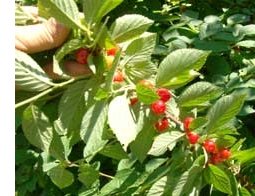 Nanking Cherries are one of our favorite Useful Plants. They are one of the easiest plants to grow - all they need is a well-drained site and 6 hours of sun. We've been recommending them since the inception of UPN and are still strong advocates.