In Asheville: On Wednesdays at 5pm pick up plants at Greenlife.
Deliveries: We deliver plants up to four hours away from our nursery for a distance-based delivery fee. Share the delivery fee with your friends or neighbors and get a discount by arranging a group order! |
|
|
See our curriculum of classes on the website. Bring Chuck in for a private consultation on any of these topics or arrange for a small or large group class. More info? Click here. |
|
|
With a UPN gift certificate, the recipient can get just what they want when they are ready to plant.
Or, let your friends and family know that you'd like a UPN gift certificate for a special tree, bush, or other useful plant.
Gift certificates are available in any denomination of $5.00 or more. We will send a paper certificate in the US mail. If you prefer, we can send a PDF file that you or your recipient can print.
You can pay for gift certificates with a credit card through our secure website, or contact us at info@usefulplants.org or (828) 669-6517 for other options.
|
|
|
We're thrilled to offer the following videos:
Facebook
Useful Plants Nursery is on Facebook! Be a friend and/or fan, hook up with other Useful Plants people, and share your stories. |
|
|
Useful Plants Nursery is a small, permaculture-based nursery specializing in useful, phytonutritional, food, and medicine plants well-adapted to our Southern Appalachian mountains and surrounding bioregions. Our plants are grown without the use of synthetic pesticides at our nursery located at Earthaven Ecovillage.
I believe that growing your own food and medicine plants is a vitally important strategy and practice for regaining control over our collective and personal lives, our health, and our individual and bioregional economic well being. Our nursery is dedicated to putting those beliefs into practice and truly creating "Liberation through Abundance" as we serve your needs for healthy, useful landscape plants, and work together to reweave the web of life.
-- Chuck Marsh, nurseryperson, permaculture designer, bioregional inhabitant
UPN is a North Carolina certified nursery.
To see a full list of our plants, click here. |
|
|
Useful Plants Nursery
111 Another Way
Black Mountain, NC 28711
828.669.6517
www.usefulplants.org
info@usefulplants.org |
|
|
|
|
Welcome summer!
Saturday, June 25 from 10-4, we'll be joining our neighbors, Broad River Botanicals, for a plant sale! Broad River Botanicals are on Highway 9, between Black Mountain and Bat Cave. Come see us and pick up some berry plants and perennials for your yard.
Greenlife deliveries no longer have a delivery fee! Since we won't be at the market regularly, this provides a way to get plants in Asheville. The delivery is at 5pm on Wednesdays. Please let us know by Tuesday what we can bring for your garden! |
|
|
 Our senior apprentice, Will Rogers, recently completed his 18-month stay at UPN, leaving us with a gift of five more Plant Jam videos. Our senior apprentice, Will Rogers, recently completed his 18-month stay at UPN, leaving us with a gift of five more Plant Jam videos.
The videos include followups to the fig winter protection and blackberry videos, along with pruning mature blueberries and muscadines. As a special treat, Will created a creative view of constructing our new propagation greenhouse this year.
|
|
 |
|
Plant of the month: Grapes |
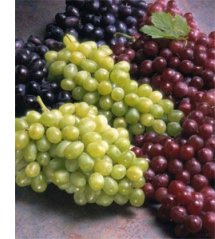
This month we celebrate grapes. Muscadines are our favorites for their high productivity, adaptation to our Southern climate, and disease resistance, but this month we want to highlight all the other wonderful types of grapes we grow. Many people prefer these grapes for their thinner skins and variety of tastes.
‘Concord’, of Welch’s grape jelly fame, is a blue seeded grape, with the taste of childhood. Concord grapes are known for cooked juice and jelly, though they are mighty good fresh from the vine. Concord is a native American grape first grown from seed by E.W. Bull in 1849. It is susceptible to black rot, powdery mildew, and downy mildew.
‘Catawba’ is a very old American grape variety, with sweet red grapes. It ripens two weeks after Concord and is hardy to about -10F and has similar disease susceptibility as Concord.
‘Mars’ is a blue, seedless grape with the largest berry of all American-type seedless grapes – the only seedless variety we carry. The vine is hardy to -25F if it has a long fall to harden off and is one of the last to bud out in the spring, avoiding most late frosts. The fruit ripens three weeks before Concord.
‘Sunbelt’ grapes are similar to Concord though resistant to downy mildew and powdery mildew. The grapes may ripen unevenly in hot summers, with a single cluster containing some ripe and some unripe grapes.
‘Edelweiss’ is a white wine grape with excellent disease resistance, which can also be eaten as a table grape. The vines are hardy to -30F. This is the best choice for organic production of a white wine grapes.
‘Marechal Foch’ is a blue French-hybrid wine grape that is gaining popularity in the Northwest for organic wines. It also makes good fresh juice, with a taste similar to sweet cherry juice. The vines are hardy to about -25F.
Powdery mildew
Most table and wine grapes are susceptable to powdery mildew. In the nursery we find that some years this is more of an issue than others. Powdery mildew is a fungal infection that requires a little rain followed by 13 hours of leaf wetness when temperatures are between 50 and 80F.
You can minimize the chance of infection by growing a resistant variety, such as Sunbelt, ensuring that the grape vines have good air flow and morning sun to shorten the time leaves remain wet, keeping them well pruned so the sun can reach each leaf.
If powdery mildew develops, you can either leave it (it's unlikely to kill a healthy plant) or spray with an organic anti-fungal oil, such as Sonata. If you want to spray, you need to do so early - the spray won't deter a heavy infection. |
|
|
|
Ask the Chuckster: Useful plant advice from Chuck Marsh |
by Chuck Marsh, UPN founder and horticulturist

Japanese beetles!
It's Japanese Beetle time again. We spotted the first few Japanese beetles this week, so their annual July onslaught on our gardens, orchards, and vineyards is just beginning. While Japanese beetle damage can be quite disconcerting when they begin feeding on your favorite plants, their damage is mostly cosmetic and is usually not fatal to the plants they choose to munch on.
I have a theory that Japanese beetles may even help plants endure the mid to late summer droughts so common to our region by reducing a plant's leaf surface area, thus reducing its water needs during dry times. Japanese beetles are top feeders, so they only usually eat the uppermost foliage on a plant. In the case of wine or table grapes, this may get more sun to the grape clusters, thus resulting in higher fruit sugar content and more even ripening. The little rascals tend to prefer some plants over others. They like the rose family (apples, plums, aronia, quince, serviceberry, etc.), table and wine grapes, and hazelnuts.
If you decide you just can't stand to watch them devour your favorite plants, you have several options, We mostly hand pick the beetles by brushing them off the plant (they tend to drop off when disturbed) into a quart yogurt container, filled 1/3 full of water with a little dishwashing detergent added as an anti-surfactant, that is held below the grazing beetles. We patrol for them once or twice a day during their peak feeding frenzy.
If you want to try spraying, you can use Spinosad, hot pepper wax, or a homemade bug juice spray. Bug juice spray is made by whizzing up a couple of tablespoons of live Japanese beetles in some water in your blender. This is not for the squeamish among you! FThen filter the resulting bug juice through several layers of cheesecloth to remove the bug parts, add to your sprayer, fill with water, add a teaspoon of liquid detergent as a sticker/spreader, and spray your susceptible plants. It's not 100% effective, but it definitely reduces the population. Be sure to respray after a hard rain.
By the way, those Japanese beetle pheromone traps will actually draw beetles to your garden, so don't hang them anywhere close to the plants you're trying to protect.
Summer fertilization
Last call for fertilization The first week of July should be your last summer fertilization for your trees and shrubs with a good blended organic fertilizer. This will allow your plants to grow some more and yet harden off their new growth before cold weather arrives in the fall. Be sure to water the fertilizer in well after application and regularly (say twice a week) for a few weeks thereafter.
Summer watering
The full heat of summer is not the time to stop watering your plants, particularly if they were planted this past spring. Even though we have been blessed with some spotty afternoon thundershowers recently, the ground is still dry deeper down. Shallow surface watering is really not that helpful and encourages plants to develop shallow root systems (not so good for drought proofing your plants!).
Make sure your plants are mulched in no more than 2" deep (keep the mulch away from tree stems) and deep water them once or twice a week, depending upon conditions (increase the frequency of watering if it's sunny, hot, and dry. Deep watering means applying 1" or more of water at a time, not just close to the stem, but out to the plant's drip edge (outer edge of foliage). Plants will thrive if they get at least 1" of water a week.
If watering feels like drudgery to you, sing, recite poetry, or have loving conversations to your plants while you water. They really like being loved on. If you're still feeling challenged, invest in a drip or micro sprayer irrigation system with a simple timer for your plants. Just be sure to drain your irrigation system before cold weather comes.
|
|
|
|
|
|