Classical Conferences and Meetings in 2011 and 2012 |
2011 Conferences
ICC—Illinois Classical Conference
October 7–9
University of Illinois
Champaign-Urbana, IL
Representatives: Don Sprague and Laurel De Vries
Presentation: "Visions of Vitruvius in the New World," Don Sprague
CAAS—Classical Association of the Atlantic States
October 13–15
Baltimore Marriott Hunt Valley
Hunt Valley, MD
Representative: Don Sprague
NYSAFLT - New York State Association of Foreign Language Teachers, Inc.
October 14-16, 2011
Rochester Riverside Convention Center
Rochester Hyatt Regency
Rochester, NY
Representatives: Drs. Lou and Marie Bolchazy
MaFLA - Massachusetts Foreign Language Teachers Association
44th Annual Conference
October 27–29, 2011
Sturbridge Host Hotel
Sturbridge, MA
Representative: Don Sprague
AIMS - Association of Independent Maryland Schools
Annual Conference
October 31, 2011
Baltimore Convention Center
Baltimore, MD
Representative: Don Sprague
2012 Conferences
APA - The American Philological Association
143rd Annual Meeting
January 5–8, 2012
Philadelphia Downtown Marriott Hotel
Philadelphia, PA
Representatives: Drs. Lou and Marie Bolchazy, Allan Bolchazy, Dr. Bridget Buchholz, and Don Sprague
CAMWS - The Classical Association of the Middle West and South
108th Annual Meeting
March 28–31, 2012
Louisiana State University
Belle of Baton Rouge Hotel
Baton Rouge, LA
Representatives: Drs. Lou and Marie Bolchazy, Allan Bolchazy, and Dr. Bridget Buchholz
ACL - The American Classical League
65th Annual Institute
June 27–30, 2012
University of Nevada
Las Vegas, NV
Representatives: Drs. Lou and Marie Bolchazy and Allan Bolchazy
Information taken from www.BOLCHAZY.com |
|
 |
|
Interesting Tidbits to Share |
From Parade, 9/4/11
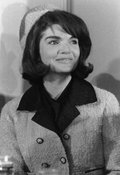
This image is a work of an employee of the Executive Office of the President of the United States made during the course of the person's official duties. As a work of the U.S. federal government, the image is in the public domain.
From an exclusive interview with Caroline Kennedy concerning her soon-to-be-published book containing intimate, never-before-released interviews between historian Arthur Schlesinger and former first lady Jacqueline Kennedy Onassis, in talking about how important reading was to her parents, she shares this about her mother as avid reader:
She had a deep engagement with literature, history, plays, and poetry. They gave her strength, even in difficult times. Because she knew about ancient Greece and read the plays written back then, she knew about suffering and about perseverance.
Allusions Ubique!
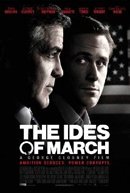
The Ides of March
A new movie scheduled for release, October 7. George Clooney directs and stars in this drama that tracks a presidential candidate and his bright but naive campaign manager (Ryan Gosling). So, check it out and let us know if the title is appropriate or not. Perhaps an extra credit opportunity for your students?
Long Story Short—
The History of the World
in 75 Minutes
Colin Quinn stars in this one-man show that Chris Jones, Chicago Tribune theater critic, proclaims is "Whip smart! Hugely enjoyable." Latinists might find this banner in ads for the show playing in Chicago of interest—"We came, we saw, we screwed up." |
|
|
|
The New AP* Syllabus
As Allan Bolchazy notes in his NJCL report above, we are pleased to share with you an overview of the Latin passages from Vergil's Aeneid required for the current AP* Latin exam syllabus, which will be examined for the last time in May 2012, as well as those passages included in the new AP* Latin exam syllabus, which will be effective with the 2012–2013 academic year. Please note that the new Latin syllabus includes some passages currently part of the AP* Vergil syllabus as well as some new selections from the Aeneid. To review this comparative analysis, click here.
To learn more about the new AP* Latin syllabus, check out http://advancesinap.collegeboard.org/world-languages/latin. In addition to outlining the new syllabus and student outcomes, the site explains how to prepare your course for the AP* audit. At workshops this summer, presenters have explained that a sample exam is scheduled for promulgation in early spring. We will endeavor to keep you apprised as we learn more.
Bolchazy-Carducci Publishers takes pride in having served AP Latin students and teachers by providing a range of textbooks and other resources for students. We have been diligently developing new texts both revised and newly constructed in accordance with the new AP Latin curriculum. We have highlighted our new Caesar texts in previous issues of eLitterae and our revised Vergil texts in this issue and the next.
Please note that A Vergil Workbook, 2nd Edition and Vergil's Aeneid: Selected Readings from Books 1, 2, 4, and 6, PDF exam copies will be available upon request in early 2012 and in print shortly thereafter and the new A Caesar Workbook and Caesar: Selections from De Bello Gallico PDF exam copies will also be available upon request in early 2012 and in print for the Ides of March 2012. Caesar: Selections from De Bello Gallico will include both the required Latin passages and those passages to be read in English. Bolchazy-Carducci is also preparing vocabulary cards for each author's AP selections. |
|
|
|
The Aural/oral Components of the Latin for the New Millennium Series
Tuesday, October 25, 2011
6:00-7:30 ET
Latin for the New Millennium coauthor Terence Tunberg, celebrated neoLatinist and Conventicula Latina director, discusses the aural/oral components of the series. Dr. Tunberg will address such issues as how best to incorporate oral Latin in your LNM classroom. He will also demonstrate some of the oral activities delineated in the LNM Teacher's Manuals.
- All you need to participate in these webinars is high-speed Internet access, computer speakers/ headphones, and your access code, which we will provide to you once you register.
- Participation is free. All webinars provide an opportunity for participants to ask questions.
- Learn lots—attend each presentation. We’re happy to provide documentation of your participation for your supervisor(s)
Rave Review for Latin for the New Millennium Webinars
"The webinars are such a gift, and it's so kind of members of the LNM community (whether at the publishing level as you are, or enthusiastic teachers as Ms. Northrup is) to give time and energy to producing them, my only response is to say thank you! In both cases, the webinars offered very good, very useful information and embodied such a great spirit of collegiality that I would only ask you to do what you can to encourage such activity to continue."
–Rodney Larsen (Two-time Webinar Participant)
Academy of the Holy Cross
Kensington, MD
For more information about and to register for free webinars click here |
|
|
|
Bolchazy-Carducci textbooks are now available through Google and Xplana eBookstores, with more titles going digital every day! Each eBook offers a variety of tools to enhance the learning process, and eBook distributors are continually adding new features.
What do B-C eBooks currently offer?
eBooks have the same content as our traditional books in print, with these enhancements:

• Searchable
• Adjust text size, typeface, line space
• Free samples of books
• Worry-free archive
• Available on any computer with an internet connection
• Readable on:
- the web (via Windows or MAC computers)
- iPhone, iPad and iPod touch
- Android
- eBook Devices: Barnes & Noble Nook and Reader™ from Sony
Google ebook information: http://books.google.com/help/ebooks/overview.html
Google ebook store: http://books.google.com/ebooks
• Searchable
• Adjust text size, typeface, line space
•Add notes, customized highlights, and other annotations—all of which are added to the embedded annotation manager for convenient access
• Worry-free archive
• Available on any computer with an internet connection
• Readable on:
- the web (via Windows or MAC computers)
- tablet computers (any device that is Flash compatible)
Xplana ebook information: http://tinyurl.com/4qlyhye
Xplana ebook store: http://shop.xplana.com/
How do I purchase a B-C eBook?
Simple! When you are browsing through www.Bolchazy.com, any time you see Google or Xplana eBook logo, click on the logo, and you will automatically be directed to a webpage where you can purchase the eBook.
Can I purchase direct from the distributor?
Yes! If you prefer, you can link directly to our eBook providers’ websites and search by title, by author, or by Bolchazy-Carducci Publishers to locate the title you would like to purchase. The Google ebooks store offers a preview of the book, including the table of contents and select pages.
What hardware is required?
You can read eBooks on a Mac, PC, iPhone, iPad, Android, or a variety of eReaders. |
|
|
|
Illinois Classical Conference |
ICC President and LNM 3 Consultant Becki Wick invites all Illinois classics teachers and colleagues from neighboring states to the upcoming annual meeting of the Illinois Classical Conference hosted by the University of Illinois, Champaign-Urbana, IL, October 7–9.
ICC has lined up Professor Lothar Haselberger, an architectural historian at the University of Pennsylvania, to give the keynote address on Saturday after lunch. Haselberger's specialties include the Temple of Apollo at Didyma and Augustan architecture with an emphasis on the Pantheon. |
|
|
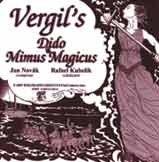
Audio Sampling of Vergil's Dido Mimus Magicus
Jan Novák, Composer
Symphony Orchestra of the Bayerischer Rundfunk
Rafael Kubelik, Conductor
Jan Novák's haunting choral rendition of Vergil's poetry highlights the voice of Dido the queen and her tragic tale of love and duty. In Dido Novák depicts the torture of an unfulfilled love ending in suicide; while Mimus Magicus is the drastically depicted love-magic of a Roman woman. Widely acclaimed in Europe, Novak's Dido and Mimus Magicus is available in a CD recording and a 3-language libretto (40 pages). Sixteen individual tracks are also available for downloading through B-C's iPodius.
Enjoy the following tracks:
Invocation: Choral Lament for Dido (1.32 minutes)
Dido Curses Aeneas, Part 1
(.43 minutes)
Novák (1921—1984) worked with Aaron Copland and then became a student of compatriot Bohuslav Martinu. In the mid-fifties, Novák began to devote himself to the Latin language and literature. The sound and rhythm of Latin verse fascinated him. He set the poetry of Horace, Catullus, Vergil and others to music, carefully maintaining the meter and rhythm of the original. Then he went on to create musical versions of the great prose works of Caesar, Cicero, and Seneca. When asked why the Latin language played such an important role in his work, Novák would say: Nihil est, bone, immortalitatis causa hoc fit ("It is nothing, good man, (but) it does happen for the sake of immortality"). Click to learn more about Jan Novák whose life reflects the conflicts and challenges of 20th-century life in Czechoslovakia.
Review of Novák's Dido
"In his large-scale oratorio recounting the fateful events of the life of Dido, Jan Novák (1921–1984) responded to Vergil's highly charged verses with music of an exceptionally dramatic nature. Rafael Kubelik leads the forces of the Bayerischer Rundfunk in a compelling and well-recorded performance that captures the pathos of Novák's score. The highlight of the performance is Marilyn Schmiege's superb interpretation of the very demanding role of Dido. A release of special merit that deserves a place in any collection of twentieth-century music and an unusual opportunity to experience the work of this little known and powerful composer."
–Thomas L. Noblitt
Indiana University
With iPodius, one can purchase downloads of single works. |
|
|
|
Oct. 15, 2011: Deadline to register for National Classical Etymology Exam
Nov. 4, 2011: Deadline to register for CAMWS Latin Translation Contest
Dec. 15, 2011: Deadline to register for SCRIBO writing contest
Jan. 15, 2012: Deadline to register for Classical Literacy Exam
Jan. 15, 2012: Deadline to register for National Mythology Exam
Jan. 17, 2012: Deadline to register for National Greek Exam
Jan. 18, 2012: Deadline to register for National Latin Exam
Jan. 31, 2012: Deadline to register for National Roman Civilization Exam
Feb. 11, 2012: Deadline to register for Medusa Mythology Exam
Mar 1, 2012: deadline to register for Exploratory Latin Exam for fall 2012 |
|
|
Bolchazy-Carducci
Links of Interest |
If it has not arrived yet, the Roman Calendar 2011–2012 should be appearing any day now in your USPS mailbox. If you're not sure whether you're on the mailing list for the Roman Calendar or not, please contact us at info@bolchazy.com. The calendar features important dates in Roman history as well as a daily snippet from the wisdom of the ancients.
Preview Bolchazy-Carducci Titles

Preview Bolchazy-Carducci titles before you buy using Google Preview.
Downloadable Products
iPodius - Bolchazy-Carducci Publishers online shop for: audio, software, video, and a treasure trove of teacher created materials in the Agora.

BCP Facebook Fan Page
Become a FAN of Bolchazy-Carducci Publishers, visit our Facebook Fan page for the latest news from BCP. |
|
|
|
|
Dear Readers,
Mea culpa! The July/August issue of eLitterae was supposed to include a set of photographs to accompany the report on the American Classical League Institute. Lapsus mentis meae! Thanks for your understanding. In this issue please find a gallery of photos from ACL.
Don Sprague |
|
|
64th Annual American Classical League Institute Photo Gallery |
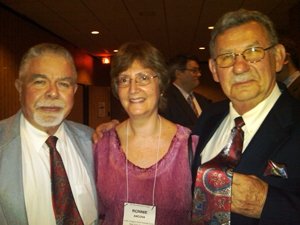
LNM 3 Consultant Nick Young, BC Latin Reader Series Editor Ronnie Ancona, and Lou Bolchazy at the Banquet. Great minds dress alike as Dr. Ancona is flanked by paisley ties!
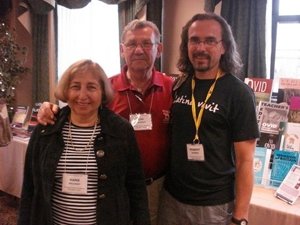
Marie Bolchazy, Lou Bolchazy, and Bob Patrick pose in front of the B-C
book display.
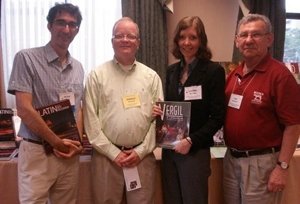
Peter Millet, Editor Don Sprague, Editor Intern Laurel DeVries, and
President Lou Bolchazy
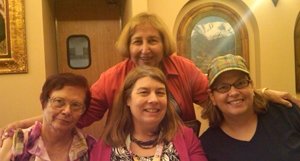
Striking a pose at a delicious Persian dinner, Executive Vice President Marie Bolchazy bonds with veteran B-C author Rose Williams, eLearning
and Production Manager Jody Cull, and new B-C author and Caesar scholar Debra Nousek.
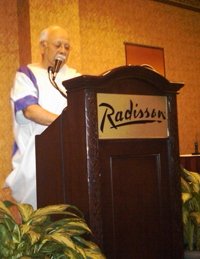
Toga-clad Stan Iverson delivers "gratias maximas" at the banquet.
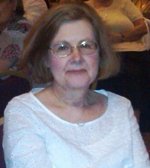
AP Latin Committee Chair Mary Pendergraft, of Wake Forest University, is also honored with an ACL Merita Award.
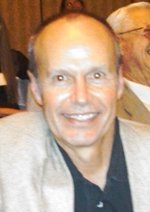
Centaur Systems creator Rob Latousek is honored with an ACL
Merita Award. |
|
|
Heartfelt Appreciation for Senior Editor Laurie Keenan |
After sixteen years working for Bolchazy-Carducci Publishers, “senior editor” Dr. Laurie Haight Keenan has resigned her full-time position. August 29 marked Laurie's last day on the job and in the office. Over the course of her tenure at B-C, Laurie shepherded dozens of books to publication, established special relationships with authors as editor, advisor, and, in many instances, friend, and served as mentor to editors new to B-C. I am especially grateful for the professional advice and mentoring that Laurie provided me in my first years as an adjunct editor but most especially over the last few years as we shared office space and carpooled from the city to the office in Mundelein.
A project near and dear to Laurie has been the BC Latin Readers series. She will continue to be the volume editor for each title in the series. Working closely with Ronnie Ancona, Laurie will edit in a part-time capacity from home over the next couple years, rolling out the remaining titles in this special series. Ronnie Ancona's remarks about Laurie are a testament to the special relationship she has developed with authors over the years.
“Working with Laurie Haight Keenan, first as B-C author, and then as fellow editor for the BC Latin Readers has been one of the most enlightening and rewarding parts of my career for more than a decade. Laurie’s consummate professionalism, her smarts, her wit, and her superb writing and editing abilities have made my relationship with her over these years both a pleasure and a tremendous learning experience.”
Working part-time will afford Laurie the opportunity to pursue a number of professional and personal interests. We wish her well in these endeavors. |
|
|
|
An Interview with Barbara Weiden Boyd Vergil Specialist & Author of B-C Vergil Texts |
Barbara Weiden Boyd has updated her Vergil textbook to meet the new 2012–2013 AP Latin curriculum. Vergil's Aeneid: Selected Readings from Books 1, 2, 4, and 6 will be available in early Spring 2012 along with the revised A Vergil Workbook 2nd Edition, which Professor Boyd revised with her coauthor Katherine Bradley. We look forward to featuring an interview with Katherine in a subsequent issue of eLitterae.
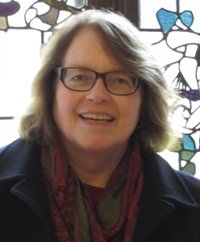
How did you become attracted to teaching Latin?
BWB: When I started graduate school I thought I’d be focusing on Greek tragedy, since I had written a senior thesis on Sophocles’ Antigone. But there were a couple of truly inspiring Latinists in my program—both professors and fellow students—and so much exciting new work was being done on Latin poetry at the time that by the time I had to decide on a dissertation topic it was pretty clear that Latin was the way to go—and that means teaching Latin, too. The rest is history.
Which of your scholarly projects brings you the greatest sense of accomplishment?
BWB: I’ve been working on a scholarly commentary on Ovid’s Remedia Amoris for a while now. It is extremely slow going, and I can only really focus on it when I have long stretches of uninterrupted time; but there’s something great about working on something that brings surprises every day. You never know what you’re going to need to learn about next—medicinal uses of sulphur, predicative uses of participles, legal forms of manumission in the Roman world, nautical imagery in doubles entendres, alternate versions of the Telephus myth, the difference between straw and hay, syllepsis vs. zeugma—you name it, I’ve had to learn about it.
But I generally get caught up in every project I’m working on—it’s the real reward of the academic life to be able to do so.
Did you read Vergil as part of your high school Latin program? What do you recall of the experience?
BWB: I did indeed read Vergil, using Clyde Pharr’s textbook—which I loved, though even then it seemed very old-fashioned to me. I remember reading a lot of Latin—that was in the days when the AP syllabus included all of Books 1, 2, 4, and 6. My favorite thing was reading similes, though the vocabulary in them was hard.
Why do you think studying Vergil is relevant for today's students?
BWB: Well, I don’t know if “relevance” is a particularly useful criterion—relevant to what? To learning Latin? To growing up? To the difficulties we all face in life? To being human? But I do think reading the Aeneid is rewarding in a lot of ways—it opens up to students whole worlds of ideas about poetry, literature, history, myth, politics, human experience in ways that are both cosmically big (so what is fate, anyway, and does it matter whether I believe in it or not?) and personally meaningful (choices do have consequences). And Vergil’s language is simply, perfectly, beautiful; it is a privilege for teachers and students alike to be so close to his ways of thinking, which is what happens when you read him closely, slowly, carefully.
What aspect/story of Vergil do you most like to teach?
BWB: I like it all; and I like reading Vergil with students, because they always see things I haven’t yet discovered, and I love that. Even when they make mistakes, the mistakes can reveal something about the text. It’s an endless process of learning more (but never enough) about Vergil.
If I could only read one book of the Aeneid ever again—well, that would be very bad, and I don’t want to think about it. But if this were a “Sophie’s choice” situation and I could only save one book from the burning monastery (think The Name of the Rose), well, probably that would be Book One. But then again, I love Book Seven, too, and Book Twelve . . .
If you were to give young Classics PhDs beginning their college teaching one nugget of advice based on your years of success as a classics professor, what would that be?
BWB: Teach what you love, and what you want to learn more about.
With Vergil revisions behind you, what project is next to receive your attention and enthusiasm?
BWB: First of all, Vergil revisions are never “behind” me, except in the ancient sense! And I plan to add to the current Selections over the coming years.
But the next project, aside from the Remedia commentary, is a paper (or two) on the reception of Homer, in particular, in the TV series Mad Men. I’m becoming more interested in reception generally these days, since classical prototypes, ideas, and models seem to be all around us lately; stay tuned.
Speaking of Homer, I’m also working on a paper on the Homeric epics as an intertext for Ovid’s Metamorphoses; there’s some interesting stuff there.
When not involved in teaching, researching, or writing about the classics, what do you most enjoy doing?
BWB: Well, as my last answer implied, I watch a lot of TV—I’m particularly attracted to “epic” narratives extending over years, with huge casts of characters, like The Wire, Deadwood, Mad Men. (I also like long novels—Hardy, Austen, Dickens, etc.) There’s nothing like a DVD marathon of a season of 24 over a long, cold, February weekend in Maine.
I also love Italy and spend an inordinate amount of time either being (traveling, doing research) in Italy or thinking about my next trip there. It’s endless—endlessly beautiful, fascinating, packed with stuff to see and do and learn about. A lot like Classics, actually.
Barbara Weiden Boyd is the Henry Winkley Professor of Latin and Greek at Bowdoin College, where she teaches courses in Greek and Latin languages and literatures, classical mythology, the city of Rome, and the Roman family. Boyd earned her BA in Classics at Manhattanville College, and holds an MA and PhD in Classical Studies from the University of Michigan. She has also taught at the Intercollegiate Center for Classical Studies in Rome as a visiting professor for Duke and Stanford Universities, and has been a Visiting Fellow at the Bogliasco Foundation near Genoa, Italy, and at Corpus Christi College, Cambridge. Since 2002, Boyd has directed (with Dr. Margaret Brucia) an AP Latin workshop in Rome for high school teachers. She has served on the AP Latin Test Development Committee for eight years, three of them as its chair, and has served as a faculty consultant for the grading of the AP Latin exam.
Boyd specializes in Latin literature, especially the poetry of Vergil and Ovid. Her books include Ovid’s Literary Loves: Influence and Innovation in the Amores (1997); Brill’s Companion to Ovid (2002), an edited collection of scholarly essays on the Ovidian corpus; a textbook for intermediate Latin students, Vergil’s Aeneid: Selections from Books 1, 2, 4, 6, 10, & 12 (2001), and other Vergil titles: Vergil's Aeneid 10 & 12: Pallas & Turnus (1998), Vergil's Aeneid 8 & 11: Italy and Rome (2006), and, as coauthor with Katherine Bradley, A Vergil Workbook (2006) and its Teacher's Manual. |
|
|
|
2011 National Junior Classical League Convention |
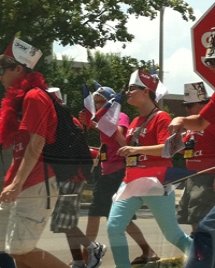 One of the treats at NJCL this year was seeing a parade of hundreds of students (and some teachers) wearing KFC buckets on their heads and t-shirts proclaiming Kentucky Fried Delegate. That is one of the many fun things that happen at NJCL conventions. NJCL is an organization of middle and high school students sponsored by the American Classical League that encourages an interest in and an appreciation of the language, literature, and culture of ancient Greece and Rome. Students also participate in Olympika, Certamen, essay contests, costume contests, a Roman procession and a farewell dance. A teaching materials exhibit provides ACL, organizations, and publishers a place to exhibit textbooks and other materials for the classroom. One of the treats at NJCL this year was seeing a parade of hundreds of students (and some teachers) wearing KFC buckets on their heads and t-shirts proclaiming Kentucky Fried Delegate. That is one of the many fun things that happen at NJCL conventions. NJCL is an organization of middle and high school students sponsored by the American Classical League that encourages an interest in and an appreciation of the language, literature, and culture of ancient Greece and Rome. Students also participate in Olympika, Certamen, essay contests, costume contests, a Roman procession and a farewell dance. A teaching materials exhibit provides ACL, organizations, and publishers a place to exhibit textbooks and other materials for the classroom.
This year, NJCL was held at Eastern Kentucky University in Richmond, Kentucky, July 25–30, 2011. Allan Bolchazy, vice- president, and Laurel De Vries, intern editor, of Bolchazy-Carducci Publishers exhibited books and other media at the teaching materials exhibit.
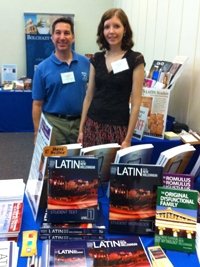
The big buzz this year was all about Caesar. Teachers were very interested to hear about our upcoming Caesar books, though a bit disappointed to find out that they are being published in Spring 2012. While this may seem to be a long time to publish a text, bear in mind that there is a process. Perhaps a discussion of how a book is created is in order. We have university professors and high school teachers, many of whom are carrying full course loads at the same time, author our textbooks. Why do we do this? These are the people who are most in tune with the latest scholarship, the latest pedagogy, who also know the students and what they need from a textbook. Once we receive a manuscript, it goes through peer review, editing, typesetting, and proofreading. We regularly develop a map and find pertinent illustrations. Only then do we print it. While this can be a time-consuming process, it is worth it.
Vergil was also a topic of discussion because of the change in the AP* Curriculum. One teacher was very surprised to learn that not only are lines being cut, but also other lines are being added! Bolchazy-Carducci is revising our popular Vergil texts to reflect these changes in the curriculum. The new editions will be published in Spring 2012. Bolchazy-Carducci has also developed a comparison chart of the Aeneid passages in the old and new syllabi that makes it easy for teachers to see the changes. Click here to access the comparison.
We gave demonstrations of our new eBooks, available through Xplana and Google. We showed off Xplana’s special eBook features—you can highlight text, annotate, create custom bookmarks, see two pages side by side or zoom in to make the text bigger. The books are in color and have a full table of contents, index and glossary. We have heard from a number of schools that are doing away with print books and going ahead with an eBook format, and we are happy to provide our most popular titles for the classroom as eBooks.
It is always a pleasure to see teachers come up to our books and enthusiastically point out their favorite books to their recently graduated colleagues while stating “you have to buy this—it’s great”. We also overheard one very enthusiastic teacher commenting on the value of the medieval passages in Latin for the New Millennium. Her response to a fellow teacher who does not share the enthusiasm for the medieval passages was, “So, you prefer the 20th century Latin in your textbook?” Hmmm.
We hope to see you next year at the 59th Annual NJCL Convention to be held July 26 to July 31, 2012 at Wake Forest University in Winston-Salem, North Carolina.
Allan Bolchazy |
|
|
|
Specials for eLitterae Subscribers |
Free shipping and handling for the latest
BC LATIN READER, hot off the press!
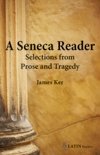
A Seneca Reader
Selections from Prose and Tragedy
James Ker
lvi + 166 pp. (2011) 5" x 7.75” Paperback
ISBN 978-0-86516-758-2 $19.00
Seneca spins the republican Cicero’s stylistic legacy and Augustan literature’s gold into the distinctive silver of the first century CE. Introduce students to a thinker whose literary voice sounds against the volatility of his times.
This reader features: 568 lines of unadapted Latin text from four main genres • introduction to Seneca’s life, death, philosophy, style, and literary influence • notes at the back • full vocabulary. This reader is an ideal college text as well as a fine addition to a high school Latin 5 curriculum.
One copy of each, prepaid, no returns, not available to distributors.
Offer expires 10/15/11
Transitioning to Unadapted Latin
Teachers designing a curriculum that transitions students from the beginning Latin lessons of Latin 1 and 2 to reading the unadapted of upper level Latin courses have found Bolchazy-Carducci's LEGAMUS Series an excellent vehicle for helping students master that transition.
Order a copy of each student edition at a 30% + discount. Purchase a copy of the Teacher's Guide, in addition to at least one LEGAMUS student edition, and we'll waive shipping and handling for the TG.
 Catullus: A LEGAMUS Transitional Reader Catullus: A LEGAMUS Transitional Reader
Sean Smith and Kenneth F. Kitchell, Jr.
Student Text: xxx + 162 pp (2006) Paperback ISBN 978-0-86516-634-9
$37.00 $25.00
Teacher’s Guide (Sean Smith): 85 pp (2007) Paperback ISBN 978-0-86516-671-4 $31.00
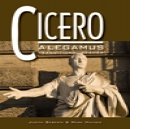 Cicero: A LEGAMUS Transitional Reader Cicero: A LEGAMUS Transitional Reader
Mark Haynes and Judith SebestaStudent Text: xxii + 226 pp. (2010) Paperback
ISBN 978-0-8516-656-1 $37.00 $25.00
Teacher’s Guide: x + 68 pp. (2010) Paperback ISBN 978-0-86516-735-3 $31.00
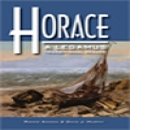 Horace: A LEGAMUS Transitional Reader Horace: A LEGAMUS Transitional Reader
Ronnie Ancona and David J. Murphy
Student Text: xxiv + 189 pp. (2008) Paperback ISBN 978-0-86516-676-9
$37.00 $25.00
Teacher’s Guide (David J. Murphy): viii + 52 pp. (2010) ISBN 978-0-86516-732-2 $31.00
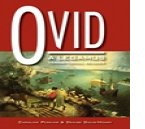 Ovid: A LEGAMUS Transitional Reader Ovid: A LEGAMUS Transitional Reader
Caroline Perkins and Denise Davis-Henry
Student Text: xxvi + 132 pp. (2008) Paperback ISBN 978-0-86516-604-2
$37.00 $25.00
Teacher’s Guide: viii + 76 pp. (2010)
ISBN 978-0-86516-734-6 $31.00
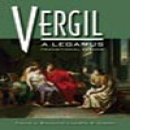 Vergil: A LEGAMUS Transitional Reader Vergil: A LEGAMUS Transitional Reader
Thomas J. Sienkiewicz and
LeaAnn A. Osburn
Student Text: xxvi + 136 pp. (2004) Paperback ISBN 978-0-86516-578-6
$37.00 $25.00
Teacher’s Guide (LeaAnn A. Osburn
and Karen Lee Singh): x + 78 pp. (2010) Paperback ISBN 978-0-86516-579-3 $31.00
One copy, prepaid, no returns, not available to distributors.
Offer expires 10/15/11
Make sure to mention that you are an eLitterae subscriber if you place your order by phone or fax. If you place your order via www.BOLCHAZY.com, the eLitterae special offer pricing and free shipping offer will be reflected at checkout. |
|
|
|
Insights on the Development of Latin for the New Millennium,
Level 3 |
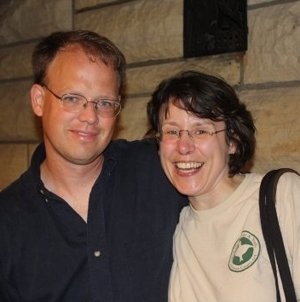
Professor Rosemary Moore and her husband, Mick Arnett
Helena Dettmer successfully recruited her colleague Professor Rosemary Moore of the University of Iowa classics and history faculty to compose two historical overview essays for Latin for the New Millennium, Level 3. Dr. Moore at this time is diligently putting the final touches on an overview essay about the late Republic and another on the early empire. Professor Moore earned her BA at Harvard and her PhD from the University of Michigan, her dissertation for which is entitled The Art of Command: The Roman Army General and his Troops, 135BC – 138AD. Prior to joining the faculty at the University of Iowa in 2003, Dr. Moore served as a visiting professor at St. Olaf College. She has taught a range of courses including Roman History, The Hellenistic World and Rome, Food in Ancient Society, Ancient Warfare, and Ancient Sports and Leisure. Her publications and presentations have focused on such topics as Roman generalship, military history, Crassus at Carrhae, the art of command, and related topics. In 2007, Dr. Moore was honored to serve as the recipient of a Blegen Research Fellowship and, in that capacity, to teach two courses at Vassar College. Bolchazy-Carducci Publishers is honored to have enlisted Professor Moore as a contributor to Latin for the New Millennium, Level 3. Here follow two questions that provide additional insight to understanding Professor Moore's passion for ancient history.
In response to the question, "How did you become interested in ancient history?" Dr. Moore replied:
I first became interested in ancient history when I spent a semester in Rome as an undergraduate. Even though at that point I was more interested in reading Greek, I became intrigued by Roman history and culture. The sites and museums were fascinating. I had only taken Latin for one year before I went to Rome, and really did not know how much there was to learn about the Romans. I spent one year in graduate school, still intending to work on Greek literature, before leaving to go on active duty in the U.S. Navy for obligated service (I went to college on an ROTC scholarship). When I returned to graduate school, I took a course on the late Republic, and when reading Caesar, realized that I was most interested in the dynamics of the army and society he lived in. I wrote my PhD on leadership methods in the Republican Roman army and continue research in that area today.
When asked, "When you're not pursuing your teaching, researching, and writing, what do you most enjoy doing?" Professor Moore shared:
In my spare time, I'm usually busy taking care of my 16-month old son, Alex. I also love knitting and spinning wool. I run and bicycle frequently. |
|
|
|
Transitioning to LNM 2 from Another Latin 1 Text
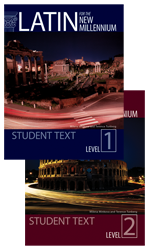
We are regularly asked, can you provide me some information on how others have transitioned from one Latin text series to using Latin for the New Millennium. We encourage those who ask that question to raise it in the LNM Teachers' Lounge and encourage others to share their transition experiences. Dr. Thaddeus Lisowski, who teaches high school Latin at Head-Royce School in Oakland, California sent us his comparison of Ecce Romani and Latin for the New Millennium. Lisowski prepared this for his students coming from the middle school where they had worked with Ecce to Latin 2 where they would be using Latin for the New Millennium, Level 2. Click to check out Dr. Lisowski's comparative analysis. If you've prepared a similar comparison between another Latin series and LNM, we'd love you to share that with us so we can post it for the benefit of our colleagues.
Our college editor, Dr. Bridget Buchholz, prepared an overview of the presentation of tenses in Latin for the New Millennium, Levels 1 and 2. This will prove a valuable resource for teachers preparing quizzes and tests as they can check it to ensure that they're not testing material not yet studied. In addition, teachers can refer students to the overview so they know what chapter to consult in strengthening their mastery of a give tense. Click to see Dr. Buchholz's chart.
Feel free to download and copy either of these analyses as needed. (NB: These will be posted in the LNM Teachers' Lounge as well.) Similarly, you are welcome to distribute them to your students. |
|
|
|
|
|