|
|
|
|
|
"Do or do not, there is no try"
-Yoda | |
|
Client Of The Month - Sam Smith |
|
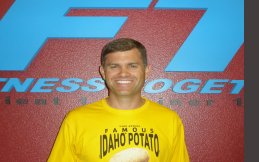
Dr. Sam Smith is a busy man with 6 children, but he is a great example of how fit you can be when you refuse to let excuses get in the way. He is a 2 time competitor in the Boise Half-Ironman (2009,2011). This year he also ran in the Idaho Potato Half Marathon, Ragnar Relay Race, cycled in the Lyle Pearson 200 mile team challenge, and capped it off by competing in Lotoja (a 206 mile one day bike race).
"Brian and Fitness Together provide me a balanced exercise training program that allows me to compete in various endurance races without neglecting the rest of my body. Brian has always adapted his workouts to meet my needs. For me, Fitness Together is a crucial part of my full body health."
| | |
|
|
What Happens When You Strengthen Your Heart Muscle? |
|
When you strengthen your heart muscle with the appropriate exercise, your heart gains exercise tolerance and endurance and improved resistance to high blood pressure. You will develop a better prospect for a healthy and long life. You will have improved chances for survival and recovery if you have a heart attack.
Heart Rate
Strengthening your heart muscle lowers your resting heart rate and increases your cardiac reserve, or the amount you can increase you heart rate to meet peak exercise or an emergency, according to Phil Davies, a Certified Strength and Conditioning Specialist, who is author of numerous evidence-based sports science publications and is qualified by the British Olympic Weightlifting Association. A stronger heart can pump more blood with each beat, so with proper training your heart can pump all the blood your body needs with fewer beats every minute.
Longevity
In April of 1995 researchers in the Department of Epidemiology at the Harvard School of Public Health in Boston published a report comparing longevity and heart-strengthening exercise in the "Journal of the American Medical Association." The researchers had followed Harvard Alumni from 1962 through 1988. They documented that as total energy expended in vigorous, heart strengthening forms of exercise increased, longevity increased. This study showed that non-vigorous types of exercise were beneficial for other measures of health but did not correlate with increased lifespan.
Heart Attack Recovery
Exercise training of your heart muscle will improve chances for heart attack survival in humans, according to an April 2011 report published in "Circulation Research" by Dr. John W. Calvert at Emory University School of Medicine. Calvert's research team documented that blood flow changes in the heart, both during and after a heart attack, damage the muscle. However, they also showed that a heart previously strengthened and conditioned by exercise undergoes biochemical and neurological changes, which make the heart highly resistant to such damage. | | |
|

| |
|
Recipe Of The Month - Sauteed Tuna Steaks with Garlic Sauce |
|
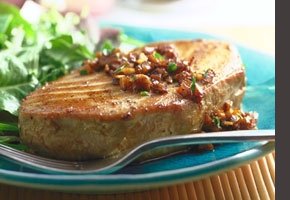 Prep time: 15 min Prep time: 15 min
Start to finish: 15 min
Makes: 4 servings
2 large garlic cloves, minced
1 tablespoon olive oil
1 tablespoon balsamic vinegar
1/4 teaspoon sea salt
1/8 teaspoon ground black pepper
4 tuna steaks (6 ounces each), each 1” thick
1 1/2 teaspoons chopped fresh parsley or basil
1. In a large, heavy nonstick skillet, cook the garlic in 1 teaspoon of the oil over very low heat, until the garlic’s aroma is apparent, 30 to 60 seconds, stirring. Immediately add the vinegar, 1/8 teaspoon of the salt, and half of the pepper. Remove to a bowl and cover with foil to keep warm.
2. Season the fish with the remaining 1/8 teaspoon salt and the remaining pepper. Heat the remaining 2 teaspoons oil in the same skillet over medium heat. Add the fish and cook until browned on the first side, 4 to 5 minutes. Turn and cook until the fish is just opaque throughout, 3 to 4 minutes.
3. Serve topped with the garlic sauce and parsley or basil.
Nutritional Information
1 Serving: Calories 240 (Calories from Fat 110); Total Fat 12g (Saturated Fat 3g, Trans Fat 0g); Cholesterol 100mg; Sodium 240mg; Total Carbohydrate 0g (Dietary Fiber 0g, Sugars 0g); Protein 33g Percent Daily Value*: Vitamin A 4%; Vitamin C 2%; Calcium 2%; Iron 6% Exchanges: 0 Other Carbohydrate; 0 Vegetable; 4 1/2 Very Lean Meat; 2 Fat Carbohydrate Choices: 0
*Percent Daily Values are based on a 2,000-calorie diet. | |
 | |
|
| |
How To Get Kids To Eat Healthy Food

|
|
Getting kids to choose healthy options at school could be as easy as changing how those options are presented.
Cornell University researchers found that putting fruit in a colorful bowl more than doubles fruit sales in schools.
The finding is just one of the changes being suggested by the Cornell Center for Behavioral Economics in Child Nutrition Programs (also known as BEN) for making school lunchrooms healthier. Cornell professor Brian Wansink, an expert in behavior and food, and his colleagues analyzed lunchroom layouts to see what impacts a kid's food decision-making process.
From United Press International:
The lunchrooms were revamped with easy, low-cost/no-cost environmental changes that resulted in an increase in healthy food choices, and schools are working with researchers and policymakers to make important high-level decisions that impact healthy food environments nationwide, Wansink said.
Other findings from Cornell for making lunchrooms smarter include making cereal bowls smaller to reduce serving sizes, making an express checkout line for students if they're buying healthy foods and moving chocolate milk behind plain milk so that kids will choose plain milk, ScienceDaily reports.
Wansink, author of the book "Mindless Eating," has researched a number of other small changes that could impact how much we eat. Among them are stowing away tempting foods, alternating water for every other drink and walking to get candy from a candy dish, instead of having it on your desk, the Chicago Tribune reported.
The arrangement of food in your cabinet is another factor (what you see first is what you eat first, research has found), as is the environment in which you eat. (Research shows that regular popcorn-eaters who were given stale popcorn at a movie theater ate just as much of the popcorn as people given fresh popcorn. However, people who didn't usually eat popcorn at the movies ate less stale popcorn than fresh popcorn.) | | |
|
| |
|
Exercise Of The Month - Mountain Climber |
|
Benefits:
This exercise is a good for speed and movement of the lower limbs upon a stable core.
Preparation:
Maintain a tall posture throughout the exercise and good stability through the abdominal complex.
Initiate a thorough dynamic warm up prior to starting this exercise.
Movement:
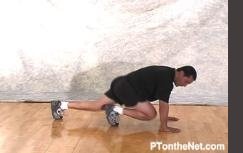
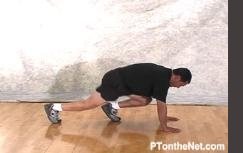
This exercise involves holding a straight-arm plank (pushup position), while performing alternating hip flexion.
Start in a straight-arm plank position – as shown.
With a straight body line, step in towards the hands with one foot. The hips, knees, and feet should all line up – as shown.
Simultaneously switch feet position (the forward leg extends back and the extended leg comes forward)
Continue this footwork pattern for the desired amount of reps or time.
| | |
|
|
The flow of energy through your body and via your breath is part of traditional Chinese and Indian meditative, healing and exercise practices. This energy, called "ki," is said to flow through and around you. Ki breathing exercises can change the way that energy flows through your body. You can learn simple ki breathing from stress relief seminars and health club yoga sessions, but there are more difficult and advanced ki breathing options.
Three-Part Breathing
This advanced exercise helps you move from being aware of your breathing to controlling how your breath enters and leaves your body. Begin by visualizing your torso in thirds: the bottom around your belly, middle around your solar plexus and lower lungs, and the top from just below your nipples to your collar. Breathe first by filling from bottom to middle to top, then from top to middle to bottom. The most advanced version of this practice involves breathing out of sequence, such as top-bottom-middle, or middle-bottom-top.
Focused Breathing
Focused breathing can improve your awareness of specific body parts, and potentially of the flow of energy to or from an area of your body. Because you can't actually breathe into, for example, your elbow, it's more of a visualization exercise that involves your breath. However, most advanced breathing exercises are more visualization than physical process. To conduct focused breathing, focus on one part of your body as you breathe in. Visualize the air and energy from your inhalation filling that body part. As this happens, you may find that you notice pain or strength in that area that you hadn't before realized. For some, this exercise is easier if you visualize the incoming breath as a wash of color that floods the body part on which you are focusing.
Cleansing Breath
Essentially the opposite of focused breathing, this exercise can help relieve stress and is said to improve your immunity and aid with healing. Begin a cleansing breath exercise by focusing on an area that hurts, or a negative emotion. Visualize that pain or emotion as a specific color. Some people get better results if they choose a negative color like angry red or a dirty green. Inhale deeply and calmly. When you exhale, visualize that angry color flowing through and out of your body. With each exhalation, you'll expel more and more of the negative color until it has left your body completely. | | |
|
| |
|
Say Goodbye to Boring Breakfasts |
|
 1. Let the sun shine in. When you sit down for breakfast, open the curtains and get some sunlight. Studies show that sunlight helps you feel awake and alert, and acts as a reset button for your body's biological clock. 1. Let the sun shine in. When you sit down for breakfast, open the curtains and get some sunlight. Studies show that sunlight helps you feel awake and alert, and acts as a reset button for your body's biological clock.
2. Balance nutrients. You need a balance of protein, carbohydrates, good fats, and fiber to stay energized throughout the day, says Dana Jacobi, author of 12 Best Foods Cookbook. One nutritious example: Top a piece of whole grain toast with apple slices and low-fat cheddar cheese. Put in a toaster oven to melt cheese.
3. Go nutty for toppings. Creative toppings can perk up that bowl of bland oatmeal. One of Jacobi's favorites: toasted walnuts. Combine a half cup of chopped walnuts with a tablespoon of sesame seeds. Toast in a pan over medium heat until fragrant, about 5 minutes, stirring constantly. Transfer to a bowl and mix in a tablespoon of brown sugar. Sprinkle lightly over oatmeal.
4. Set an eye-catching table. Before you go to bed, clear your breakfast table and have the space ready for a morning meal, advises Jacobi. "To feed your eyes and set yourself up for smart choices, use a nice bowl of fruit as a centerpiece for the table."
5. Eat from a global platter. Think internationally with some breakfast choices from other countries. Two places Jacobi recommends: United Kingdom and Japan. "A traditional Brit breakfast includes half a grilled tomato and mushrooms served with scrambled eggs," she says. "One of my favorite cereal toppers—inspired by the Japanese condiment called furikake—combines sesame seeds, nori [the sea vegetable used for sushi rolls], and sea salt. Then I add raisins."
6. Tune in. If your mornings are full of anxiety about the coming day, dial up some relaxing music. Researchers at the University at Buffalo recently found that music listeners felt less anxious and were better able to cope with impending surgery than those who didn't play it by ear. | | |
|
| |
 | | |
| |
|
| |

