In Asheville: On Wednesdays at 5 pm pick up plants at Greenlife.
Deliveries: We deliver plants up to four hours away from our nursery for a distance-based delivery fee. Share the delivery fee with your friends or neighbors and get a discount by arranging a group order! |
|
|
See our curriculum of classes on the website. Bring Chuck in for a private consultation on any of these topics or arrange for a small or large group class. More info? Click here. |
|
|
With a UPN gift certificate, the recipient can get just what they want when they are ready to plant.
Or, let your friends and family know that you'd like a UPN gift certificate for a special tree, bush, or other useful plant.
Gift certificates are available in any denomination of $5.00 or more. We will send a paper certificate in the US mail. If you prefer, we can send a PDF file that you or your recipient can print.
You can pay for gift certificates with a credit card through our secure website, or contact us at info@usefulplants.org or (828) 669-6517 for other options.
|
|
|
We're thrilled to offer the following videos:
To order a DVD containing the Plant Jam videos, see our website.
Facebook
Useful Plants Nursery is on Facebook! Be a friend and/or fan, hook up with other Useful Plants people, and share your stories. |
|
|
Useful Plants Nursery is a small, permaculture-based nursery specializing in useful, phytonutritional, food, and medicine plants well-adapted to our Southern Appalachian mountains and surrounding bioregions. Our plants are grown without the use of synthetic pesticides at our nursery located at Earthaven Ecovillage.
Useful Plants Nursery is owned by Chuck Marsh and Debbie Lienhart, and operated with the help of Troy, Liz, Lily, Lewis, and Gabriel.
I believe that growing your own food and medicine plants is a vitally important strategy and practice for regaining control over our collective and personal lives, our health, and our individual and bioregional economic well being. Our nursery is dedicated to putting those beliefs into practice and truly creating "Liberation through Abundance" as we serve your needs for healthy, useful landscape plants, and work together to reweave the web of life.
-- Chuck Marsh, nurseryperson, permaculture designer, bioregional inhabitant
UPN is a North Carolina certified nursery.
To see a full list of our plants, click here.
|
|
 |
|
Useful Plants Nursery
111 Another Way
Black Mountain, NC 28711
828.669.6517
www.usefulplants.org
info@usefulplants.org |
|
|
|
|
Spring is still officially a couple weeks away, but this weekend’s Organic Growers School is the unofficial start of spring for WNC plant people. This year Chuck and Debbie are giving a presentation on The Backyard Organic Orchard both mornings in the Gardening track. Chuck is also giving a new presentation on Permaculture and Human Nutrition on Saturday morning. We'll also have our Useful Plants outside the dining hall and student union building.
If you can’t make it to OGS, Chuck will be giving the Backyard Orchard presentation for ECO in Hendersonville on Thursday, March 6, at 6:30 pm. |
|
|
Chuck and Debbie's favorite plants for every backyard |
by Debbie Lienhart and Chuck Marsh, UPN owners
In preparation for our presentation at Organic Growers School, we compiled a list of Useful Plants that we recommend for every backyard - ones that are easy to grow, tasty, and are highly nutritious.
 Blueberries - Chuck likes rabbiteyes for their hardiness and Debbie likes highbush blueberries for their varied berry Blueberries - Chuck likes rabbiteyes for their hardiness and Debbie likes highbush blueberries for their varied berry
flavors. All are beautiful plants with highly nutritious berries. There’s a blueberry variety for every garden and taste!
Raspberries - Yummo! And they’re so much better and more affordable from the garden. Everbearing varieties
produce a crop in mid-summer and then again in fall!
 Goldrush apples - A disease-resistant gold apple for fresh eating, cooking, and cider. Debbie makes Goldrush Goldrush apples - A disease-resistant gold apple for fresh eating, cooking, and cider. Debbie makes Goldrush
applebutter and pies each year and Chuck always gets a bushel to store for winter eating.
Nanking cherries - Cherries on a shrub, what can be better than that? They have fuzzy leaves, fruit early in the
spring, and even produce fruit under canopy trees that leaf out later!
Strawberries - Everyone can grow strawberries, even in a pot or vegetable garden. Kids love them, they’re high in
instant gratification, and don’t require a long-term commitment.
Elderberries - Elderberries are very easy to grow and are a great immune system tonic. We use them in syrups,
meads, and mixed with other berries. |
|
|
|

What’s up with this warm weather? Do my plants need any special attention?
This is a challenging time for plants. They may be starting to bud out early, and the tender new growth and buds are more vulnerable to freezing temperatures than the dormant wood. I keep hearing from old timers about the great snow of 1993 and other memorable late winter events.
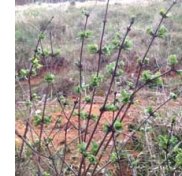
My advice is to keep an eye on the weather and be ready to cover your plants, where size allows, with a blanket if damaging cold temperatures are expected after they leaf out or while they are in flower. Seaweed sprays or drenches, such as Nature’s NOG, may afford some level of frost protection if applied 24 hours before a major cold event occurs.
Longer term, this is a reminder to plant a variety of fruits - include in your garden design and plantings plants that flower and fruit later in the season, such as Persimmons, Mulberries, Rosa rugosa, Muscadines, table or wine grapes, Elderberries, Blackberries, Raspberries and Jujubes, along with those that have more frost-tolerant flowers, such as Serviceberries, Nanking Cherries, Goumi, Hazelnuts, and Cornelian Cherries.
Spring is time to take care of plants. What do I need to do this time of year?
The top priority should be cleaning up any fallen leaves or fruit that might harbor overwintering pests. Breaking up their lifecycle in that way is an easy step to lower the number of pests in your garden. Be sure to destroy the insects by putting the material under water, burn it, compost it at high heat, or even send it to the landfill. Good orchard sanitation is the first line of defense against pests and diseases.
While you’re working on the ground, this is a good time to check and tidy up the mulch. You want to keep all carbon-based mulch, such as wood chips, leaves, and grass, at least 6 inches away from the trunk. It’s OK to have crushed rock next to the trunk to deter mice and voles. Add or spread mulch, as necessary so it’s about 2 inches deep.
Hold off on fertilizing your plants a little longer or you may stimulate frost sensitive new growth too early in the season. In the mountains or colder climates, I’d wait to fertilize with a slow release organic blended fertilizer until early to mid April, depending on how the season is progressing. In the Piedmont or warmer growing areas you may be able to fertilize your plants a little earlier. Be sure to distribute the fertilizer at the plant's drip zone for established plantings. This is the zone of most active root development and if you just fertilize around the plant's trunk, you’re probably not getting the fertilizer where it’s most needed. I like to pull back the mulch around the drip zone and apply the fertilizer to the soil, where it will be most effective, and then pull the mulch back over the fertilizer. Your fertilizer won’t do much good sitting on top of the mulch unless it is well watered in and kept watered to assure adequate mulch penetration.
What about pruning?
This is the time to be pruning your elderberries, blackberries, raspberries, kiwis, grapes, and muscadines, after the worst of our winter cold weather is over (when temperatures fall into the mid teens or below), but before the sap starts to rise. Don’t prune other plants heavily this time of year. This is a common mistake among inexperienced gardeners who want to get out and do something as spring approaches. Only prune out dead wood or you’ll be pruning away your flower buds on most plants and thus losing your fruit for the year! Save your pruning urges for June when you can do structural corrections and remove overly vigorous sprouts, keeping your plants compact and productive. Wait to prune until you can see that the temperatures will stay above 28 degrees for the next 24 hours. Newly pruned limbs are prone to freeze damage and you could end up needing to prune off more than you wanted if you prune too early. See the videos on our website for demonstrations of pruning different kinds of plants. |
|
|
|
|
|