
Spring has sprung! What do you recommend for fertilizing my existing useful plants?
For your new plantings I recommend Chux Mix, Useful Plants Nursery' own hand-blended transplant fertilizer and support blend to get your plants off to a great start. Chux Mix is available from our nursery.
Around here, mid-April is a good time to start your fertilization program. I recommend a balanced blended organic fertilizer for most of the plants we grow – something like Fertrell 5-5-3, Harmony, or PlantTone works well and is readily available from Fifth Season Garden Supply in Asheville and other suppliers of organic gardening products. See the package for recommended amounts. For blueberries and other acid-loving plants, we recommend HollyTone, coffee grounds, or cottonseed meal.
Be sure to test soil regularly to make sure soil fertility problems aren’t a limiting factor in your plants' growth or production. Add other amendments if needed by your plants. For example, some that need extra lime in our acidic soils are pawpaws, figs, cornelian cherries, pears, and apples. Apply the fertilizer and lime in widening circles as the plant’s root system grows over time.
What about urine as fertilizer?
If you want to stay very local and organic you can even use your own diluted urine. It’s our body's own miracle grow. We each produce enough urine in the course of a year to fertilize a 1 acre corn field. Our former intern, Will Rogers, who produced our Plant Jam videos produced a 30-second promotional PSA: http://www.usefulplants.org/urine-time.mp3.
If you pee outdoors, you’re using urine as fertilizer. Urine contains the plant macronutrients nitrogen, phosphorus, and potassium in significant quantities, along with all sorts of other valuable minerals and plant foods, including all those expensive vitamins your body didn’t absorb. You might make peeing outdoors a more conscious fertilization program by not peeing directly on plants - rather spread it around to cover about a square foot or so per pee, don’t concentrate it in one spot unless deep fertilizing larger plants, and be sure to always water it in well afterwards in dry weather. Then you’ll want to keep the intended source of your nutritional gift regularly well watered thereafter. Use fresh urine with caution at first because it can cause fertilizer burn to plant roots if not followed up with adequate post-pee watering, and we don’t want that.
Your urine can be a great source of fertility for your gardens, orchards, and berry patches. As with every other good horticultural practice, you need to make sure your actions are appropriate and well informed. On woody plants, don’t use urine around plants except in winter, spring, and early summer when plants need or can store nitrogen, and don’t use it too frequently, only every month or so during the growing season.
Anything else I should do for the plants?
Be on the lookout for signs of insect or disease problems. Preventative spray programs or manual removal of pests or infection this time of year are often most effective. Keep your plants monitored and use Integrated Pest Management best practices to minimize necessary interventions.
This is a good time to touch up the mulch. I like to move the mulch away from the plant, apply the fertilizer and amendments on the ground, and then replace the mulch. It should be about 2 inches thick, so you might need to add or remove material to get that depth. If you have a bad weed problem, you can put a couple layers of wet cardboard down under the mulch to suppress weeds.
With the mild winter, everyone says it's going to be a bad year for insects. What's your take on this?
Welcome to global warming! As gardeners, we’re just going to have to roll with these more extreme weather related events, doing what is called for or necessary to assure that our plant companions stay healthy and well cared for during these turbulent times.
Insects are part of the web of life, and most are not harmful to our gardening endeavors, we just need to get along with most of them. Most of the insects we see on the plants are helpful – pollinating the flowers or sometimes eating the ones that harm the plants. Our best defense against severe insect problems is the creation of a healthy, diverse orchard ecosystem filled with myriad life forms that support the whole community of life. Context is everything. Monocultures of control, whether agricultural, horticultural, or of the mind are generally not a good long-term strategy for success.
That said, you might still find you occasionally need to deal with insects and diseases that effect your fruit trees and bushes. Before you just go out and start spraying, be sure to identify the suspect and be sure it is actually causing damage, or is even still on your plant. Do your research into IPM (Integrated Pest Management) for your fruiting plants and their potential pests. Then develop a timely spray program that will actually deal with your pest or disease problem before it becomes a problem. Your local full service garden center or Extension Master Gardeners can help you develop an effective program, just don’t let them sell you on a conventional pesticide/poison strategy. The good news is that there is no reason to expose your self to or use highly toxic industrial pesticides or fungicides to deal with your insect or disease problems. There are a wide range of organically certified pesticides and fungicides now on the market to keep both you and your plants healthy. Develop your gardening skills by educating yourself about potential pests and diseases and have a timed response planned before a problem even develops.
I like to focus on the pests that can actually kill a plant – especially stem borers and voles. Stem borers, the larvae of beetles and wasps, come in many forms and bore under the bark of woody plants, potentially girdling and killing the plant or it’s branches, depending on where the borer is. Keep mulch away from your plants trunk to prevent soft, moist bark from providing easy entry for borers. Inspect your plants for any sign of borer activity, like small holes in the trunk exuding either frass( borer produced sawdust) or plant goo. If you find evidence of borers, you should try to kill them in situ by either injecting Bacillus thuringensis(Bt) solution into the hole with a syringe, by inserting a fine wire into the hole and skewering the borer.
Voles are subterranean mouse sized rodents with short tails that love to eat plant roots, and are particularly damaging during the winter months when their natural predators, snakes, are hibernating. Vole protection and prevention is a much larger story, which I’ll get into next month.
| 


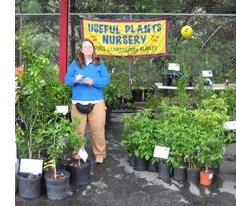 In Asheville, we'll be at Growin' in the Mountains April 27-28 and then at the Asheville Herb Festival the next weekend - May 4-6. Both events are at the WNC Farmer's Market on Brevand Road, right off I-40. Growin' in the Mountains features all local nurseries with a wider selection of ornamental plants than the Asheville Spring Herb Fest, and it's less crowded with easier parking.
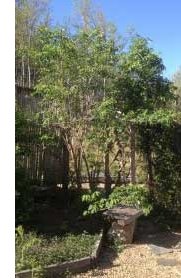 The elderberry is one of my all time favorite plants. Elderberries are one of those useful plants that I consider an old companion to humanity, those plants that have a long history of human use and have served us well for thousands of years. On my recent travels I have found Elder being cultivated from Ukraine in Eastern Europe to Angola in southern Africa. I have even found wild elderberry growing in the humid tropics of Jamaica. Most of our current knowledge of elder and its uses comes from European and native North American herbal traditions. During the Middle Ages people believed that a goddess lived in the elder tree and she would decide your luck, prosperity, happiness and health. Amulets from the twigs of elderberry were worn for protection. In 1644 a German physician published The Anatomie of Elder - an entire book written in Latin as a comprehensive guide to everything Elder. The places in Europe where the population regularly consumed elderberries processed into wines, syrups or preserves were well known as locations with high proportions of their populations living to a ripe old age. They don’t call this plant “Elder” for no reason.
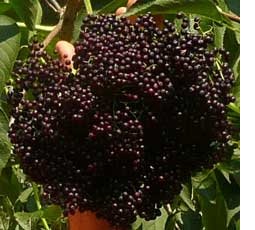 Elderberry fruit is renowned for its antiviral properties that can reduce the duration of colds and flu and can even have prophylactic effects against viral organisms. Elderberries may yet be our first line of defense against a bird flu epidemic. The berries are best processed. Many natural cough syrups use elderberry syrups as their base. Elderberries also make wonderful meads, wines, syrups, baked goods, and preserves. The flowers are medicinal as well, being noted for reducing fevers. The most common way this plant is used today is as a cold and flu remedy. It is recommended to start taking a syrup of the berries during the change of seasons and moving through the colder months of year. It can help to break up conditions of excess phlegm in the respiratory system, keep that nasty virus at bay, and relieve constipation to boot.