We deliver plants up to four hours away from our nursery for a distance-based delivery fee. Share the delivery fee with your friends or neighbors and get a discount by arranging a group order! |
|
|
See our curriculum of classes on the website. Bring Chuck in for a private consultation on any of these topics or arrange for a small or large group class. More info? Click here. |
|
|
With a UPN gift certificate, the recipient can get just what they want when they are ready to plant.
Or, let your friends and family know that you'd like a UPN gift certificate for a special tree, bush, or other useful plant.
Gift certificates are available in any denomination of $5.00 or more. We will send a paper certificate in the US mail. If you prefer, we can send a PDF file that you or your recipient can print.
You can pay for gift certificates with a credit card through our secure website, or contact us at info@usefulplants.org or (828) 669-6517 for other options.
|
|
|
We're thrilled to offer the following videos:
To order a DVD containing the Plant Jam videos, see our website.
Facebook
Useful Plants Nursery is on Facebook! Be a friend and/or fan, hook up with other Useful Plants people, and share your stories. |
|
|
Useful Plants Nursery is a small, permaculture-based nursery specializing in useful, phytonutritional, food, and medicine plants well-adapted to our Southern Appalachian mountains and surrounding bioregions. Our plants are grown without the use of synthetic pesticides at our nursery located at Earthaven Ecovillage.
Useful Plants Nursery is owned by Chuck Marsh and Debbie Lienhart, and operated with the help of Troy, Liz, Lily, Lewis, and Gabriel.
I believe that growing your own food and medicine plants is a vitally important strategy and practice for regaining control over our collective and personal lives, our health, and our individual and bioregional economic well being. Our nursery is dedicated to putting those beliefs into practice and truly creating "Liberation through Abundance" as we serve your needs for healthy, useful landscape plants, and work together to reweave the web of life.
-- Chuck Marsh, nurseryperson, permaculture designer, bioregional inhabitant
UPN is a North Carolina certified nursery.
To see a full list of our plants, click here.
|
|
 |
|
Useful Plants Nursery
111 Another Way
Black Mountain, NC 28711
828.669.6517
www.usefulplants.org
info@usefulplants.org |
|
|
|
|
Visit us at Asheville City Market on Saturdays |
This September and October we're back at Asheville City Market on Saturday mornings, 8 am - 1 pm. The market, at the Public Works building on 161 S. Charlotte Street, also includes vegetables, all kinds of local meat and fish, condiments, and baked goods. We bring a selection of plants; if you want us to bring something especially for you, please let us know a couple days ahead of time. |
|
|
Grounding Children to the Earth |
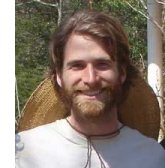 By Will Rogers, former UPN Apprentice By Will Rogers, former UPN Apprentice
I worked at market every Saturday for two seasons, so I got accustomed to a crowd of regulars. I smile even thinking about them: the woman with the glasses that I like, Nate and his friends who wear skins, Market Manager Mike, Rhett with the laugh that carries across a whole parking lot full of really sweet people...
One particular family made quite an impression on me. For one, they liked buying plants. For a while, they bought a new plant every week. But the thing that made me particularly curious was that Chuck pointed at them one week, early on, and told me that for each of their three children, Molly Graves and Chris Hamilton had planted a new tree, directly over the placenta that accompanied each child in the womb.
“Placentas!” I thought to myself, “In the earth!”
I wanted to learn more about this, so I actually went to their house and recorded their stories.
Here's what I love about what they did:
In my mind, the placenta represents a biochemically intimate connection between the mother and child. It's the very mechanism by which the mother passes nutrients and oxygen to the developing fetus. And when people throw away that placenta after the birth, they're overlooking a powerful opportunity.
Burying the placenta is like sealing a connection between the child and the earth ("The Big Momma"); it's a decision to take some of the nutrients that once fed the child, and return them to the mother. It's also like a memorial ceremony, to say goodbye to the time of gestation. Never again will that child and that mother have a connection as intimate as pregnancy, so it's worth it to say goodbye to that, consciously, during a type of burial.
 And when a tree grows directly above that placenta, a beautiful thing happens: The child and the earth remain connected in a tangible way. The child grows up with the tree. The tree feeds the child. And when a tree grows directly above that placenta, a beautiful thing happens: The child and the earth remain connected in a tangible way. The child grows up with the tree. The tree feeds the child.
When I toured the Hamiltons' backyard, one of the kids said "I NEED TO GO POTTY," almost the instant we went through the gate. This moment was especially sweet to me, because the nitrogen in urine helps feed plants. It seemed too perfect that this child (whose name I'm avoiding, to prevent her embarrassment in the next twenty years or so until she's able to appreciate this) urinated within a few feet of her tree. In other words, she is continuing to feed the tree that feeds her.
There's a beautiful partnership here, between that family and that backyard, and it's exactly the sort of thing that made me excited to work at UPN. When people live inside and eat food from shrink-wrapped containers, it's a lot harder to recognize the connection between humans and the earth.
But when a family inhabits their landscape with human energy and attention, and when its favorite Saturday-morning activity is to smile with the farmers at market, the connection becomes clear once again.
|
|
|
|

Preparing for autumn
In the mountains we’ve been getting plenty of rain for most of the summer, so plants have generally been growing quite well. We’re about 6-7 weeks out from our first frost so we want our plants to slow down and mature what growth they’ve made this year before the cold gets here, so stop fertilizing your plants with any nitrogen fertilizer if you haven’t stopped already and reduce watering to encourage your plants to stop growing and begin hardening off.
Is this a good time for planting?
This is actually the best time of year to be planting, so your new plants will be acclimated, grow roots all winter and be ready for healthy spring growth next year. When planting in the fall, hold off on any nitrogen fertilizer at planting and be sure to give plants enough water while they are still in foliage to reduce any water stress and help them root in well before winter. Once your new transplants have gone dormant or are losing their leaves for the season, back off on the water.
When fall planting, except for when planting blueberries, cranberries, and lingonberries, be sure to add a phosphate source into the transplanting mix. Phosphate is important to mix into the planting hole, not surface apply because it moves so slowly into the soil from the surface. Phosphorus is important for flower and fruit production, healthy root development, strss resistance, and winter hardiness, so don’t slack on this vital plant nutrient at planting time. Many of our soils are naturally phosphorus deficient, so it is important to add at planting time if you want your fruits and nuts to yield well in the future.
Also when planting I highly recommend you do a transplant watering with Nature’s NOG, a seaweed and humate concentrate that you dilute with water to really encourage recovery from transplant shock and to get those new roots growing.
It's been really hot and dry where I live. How can I help my plants now?
If you live in one of those dry areas around the country, you may have drought stressed plants with droopy leaves or even dropping their leaves early. This summer has been hot and dry in some areas of the southeast, and the plants are stressed. It’s important to water deeply – get the water down into the roots. If you just water the surface, the plant doesn’t develop deep roots and is less drought tolerant.
The best solution is prevention – watering deeply once a week, every week. If that’s challenging with your schedule, a drip irrigation system can be a big help. These are inexpensive and easy to use. You can get a simple kit at most garden centers or go for a more elaborate system at a landscape professionals supply store. The drip irrigation applies the water slow enough that it can really sink into the soil, rather than draining off the top of the soil.
Another good preventive measure is a two inch mulch layer. You don’t want the mulch too deep or it will smother the roots. For mulch you can use bark, compost, rocks, or other organic material. For blueberries be careful that the mulch doesn’t contain lime or eggshells – pine bark mulch is the best option for blueberries. Check the soil depth a couple times during the season – hot temperatures really eat up organic matter so you might need to add more mulch.
If your plant is showing signs of stress:
- Water the plant deeply. This might take multiple sessions. If the water is running off, create a dam to hold the water in.
- Give the plant a seaweed solution, such as Nature’s NOG. This will help the plant handle the stress better.
- Ensure that the mulch is two inches deep.
My plant dropped all its leaves already. Is it dead?
Your plant could be dead if it didn’t get enough water at critical growth or transplanting stages, contracted a root fungus, such as phytophthera, or succumbed to a pest like a stem borer. In all likelihood and given the weather recently, your plant is under stress from hot, dry weather or disease pressure and is just trying to conserve its energy by going dormant a little early. Basically, it defoliated early to protect itself from stress. If it’s still alive, however, give it some extra love and attention as described in the previous question.
To determine whether the plant is still alive:
- Bend a branch to see if it flexes or breaks. If it flexes, then the plant is most probably still alive. If the branch snaps and isn’t showing any green cambial tissue, it may be dead. If all the branches snap, the plant most likely is……… dead.
- Use a knife or pruner blade to scrape off a little of the bark. If you see green under the bark, the branch is still alive. Start at the tip of the branch and work your way towards the trunk or main branches until you see green.
If the plant is still alive, give it a quart to a gallon of dilute seaweed solution, such as Nature’s NOG, once a week for a few weeks to help the plant respond to stress and be restored to health. |
|
|
|
|
|