Look for Bolchazy-Carducci Publishers' Exhibit at Conferences in 2010–2011 |
TCA - Texas Classical Association
November 5–6, 2010
AT&T Executive Education and Conference Center
Austin, TX
Representative: Rose Williams
BCP Author Rose Williams will be presenting a paper entitled “Roman Influence in the Hispanic New World” from 3:45–4:15 on the 6th.
TFLTA - Tennessee Foreign Language Teaching Association
November 5–6, 2010
Franklin Cool Springs Marriott
Franklin, TN
Representatives: Donald Sprague and Marilyn Massey
BCP Authors Milena Minkova and Terence Tunberg will be presenting a workshop entitled "Latine legere, Latine scribere, Latine loqui" on November 5 and a presentation entitled "Teaching Latin in its Whole Continuity" on November 6.
AIA- APA Joint Annual Meeting - Archaeological Institute of America and American Philological Association
January 6–9, 2011
San Antonio, TX
Representatives: Lou, Marie, and Allan Bolchazy
Round Table discussion on Latin for the New Millennium on January 8.
CAMWS – Classical Association of the Middle West and South
April 6–9, 2011
Grand Rapids, MI
Amway Grand Plaza at the invitation of Grand Valley State and Calvin College
Representatives: Lou, Marie, and Allan Bolchazy
Panel: “Latin in Small Packages: Expanding and Varying Advanced Latin Curricular Options” organized by BC Readers Series Editor Ronnie Ancona.
Series authors will explore the BC Latin Readers’ “small package” approach to Latin curricula, which has as one of its aims to expand and vary what can be taught at the advanced level.
CANE - Classical Association of New England
March 18–19, 2011
Mount Holyoke College
South Hadley, MA
Representative: Donald Sprague
Home School Conferences and other Meetings in 2011 will be announced in a future issue.
|
|
FREE Webinars for Latin for the New Millennium |
Tuesday, January 25 and Tuesday, February 8, 2011, 6:00-8:00 ET – An Overview Look at Latin for the New Millennium and its components by Donald E. Sprague, editor.
For more information about and to register for LNM Free webinars click here
|
|
Check out this
"What is a Webinar?"
Video
|
|
Latin for the New Millennium, Level 3 |
As I mentioned in the September issue of eLitterae, Helena Dettmer (University of Iowa) and I have started writing a Level 3 textbook for the Latin for the New Millennium series. In the September issue I wrote about the Catullus section of the book. Now Helena and I are working on the Cicero section.
In contrast to the usually short, uncomplicated sentences of Catullus, the sentences penned by Cicero often are quite complicated and long. We started with a few sections from the Pro Archia. The complexity of Cicero’s elegant prose style led us to realize how the pass through method of reading used in the Cicero Legamus Reader is an invaluable help to the student. We are using that method with the Pro Archia sections of LNM 3.
An important issue that we had to address concerned vocabulary. Sometimes teachers think vocabulary is easy for students. Just look up the word and go. Not so! Often Latin words have many meanings and nuances, from which students need to choose based on the context of the passage. The question arose whether it is better to give various meanings so that students learn to choose the best meaning for the context or to give only the meanings needed for the immediate context. In the end we decided that translating Cicero is sufficiently difficult that we should narrow the range of meanings to fit the context. We are
considering, however, giving more meanings when the text is not so difficult.
Our editor Don Sprague brought up another interesting point about vocabulary. We had been reducing the number of synonyms given as definitions. So, for example, fama means “fame, renown, reputation.” We thought that in the interest of brevity and space that only one of the meanings that are synonyms should be given (so, “fame, reputation”). Don suggested, however, that high school teachers often use the synonyms to help increase the students’ English vocabulary. We agreed with him and are now incorporating more synonyms.
Then another issue involving vocabulary presented itself. Should our book incorporate a “Vocabulary to Learn” section as is present in each chapter of Latin for the New Millennium, Levels 1 and 2? Including such a section would be consistent with Levels 1 and 2. Yet if we do this, students will not be given in the notes for a later selection a definition for a word earlier included in the “Vocabulary to Learn.” Is this omission in the students’ best interests in the third year of high school instruction when they are just beginning to read unadapted Latin? Alternatively, shouldn’t students be held responsible for a certain core of new vocabulary? Our discussion of this issue is still ongoing. I will keep you posted when we reach a decision.
The most difficult part of writing the Cicero section, however, has been deciding what texts of Cicero to read. Cicero was such a prolific writer that we have many options. In addition, because Cicero wrote in various genres, we thought our selections should represent the diversity of his literary production. This means that the sections of Cicero from each genre will not be complete works. We have started with two short sections of the Pro Archia and will continue with longer sections from In Catilinam I. Then, we will include some of the De Amicitia. Each author section in LNM 3 concludes with optional readings that the teacher may choose to use or not. The optional section for Cicero will be a few short sections from the Pro Caelio. Our intention is that these selections collectively represent Cicero well.
LeaAnn Osburn
|
|
2011 National Latin Exam Deadlines |
January 18, 2011 - Postmark Deadline for application
National Latin Exam
University of Mary Washington
1301 College Avenue
Fredericksburg, VA 22401
website: www.nle.org
email: mle@umw.edu
|
|
Free Bolchazy-Carducci Roman Calendar |
Bolchazy-Carducci’s annual school year calendar is in print and has been mailed. If you have not received one and would like one, please email info@bolchazy.com.
|
|
Preview Bolchazy-Carducci Titles |
Preview Bolchazy-Carducci titles before you buy using Google Preview. How does Google Preview work?
Video
|
|
iPodius - Bolchazy-Carducci Publishers online shop for: audio, software, video, and teacher created materials.
|
|

Become a FAN of Bolchazy-Carducci Publishers, visit our Facebook Fan page for the latest news from BCP.
BCP Facebook Fan Page |
|
|
|
Dear Friends and Colleagues,
October was a busy month for Bolchazy-Carducci Publishers. Read on to see why.
Rose Williams’ new book A Beginning Latin Christian Reader: De Bonis Cogitationibus is now in print and is the special discount item for this month for eLitterae subscribers. Below you will find not only my description of Williams’ new book but her own lesson plans for Section 1 of this book.
BCP representatives have already exhibited at four conferences and you can read about their experiences in this issue. Three more conferences will occur in late October and in November. Bolchazy-Carducci’s calendar of exhibits can be found at the end of this issue and will be a regular feature of eLitterae.
A teaching tip for Latin for the New Millennium, Level 2 is included in this issue as well as the continuing description of the work being done on Level 3 for this series. If any eLitterae subscriber either has a teaching tip to use with LNM 1 or 2 or wishes to ask a question about LNM 3, please write me at Leaannbhs@aol.com or communicate with me on Facebook or Twitter.
New to eLitterae this month is a section entitled “Classics Corner.” Each month you will find in this section something of pedagogical interest to classicists. In this issue you will read about confusing names in classical mythology.
LeaAnn Osburn |
|
Special Discount for eLitterae Subscribers |
Special Offer
Bolchazy-Carducci Publishers is offering 20% off 1 to 14 copies of Rose Williams’ A Beginning Latin Christian Reader: De Bonis Cogitationibus and 25% off a classroom set of 15 copies or more.
A Beginning Latin Christian Reader: De Bonis Cogitationibus
Rose Williams
iv+ 84 pp. (2010) Paperback ISBN 978-0-86516-750-6
1-14 copies 20% off $15.00 $12.00 each
Classroom Set: 15+ copies 25% off $15.00 $11.25 each
Read below a description of A Beginning Latin Christian Reader followed by lesson plans that the author has written to use with this book.
Make sure to mention that you are an eLitterae subscriber if you place your order by phone or fax. If you place your order via www.BOLCHAZY.com the eLitterae sale price will be charged at checkout. Enter quantity, 15 or more copies, in the "Class set 15 or more" option for 25% discount pricing.
One copy, prepaid, no returns, not available to distributors. Offer expires 11/30/10
Throwback Offer
Changes in the Advanced Placement* syllabus have recently generated new interest about Caesar texts. Bolchazy-Carducci has three sets of authors writing new Caesar books to meet the needs of the newly revised syllabus. Future issues of eLitterae will present these authors and their work-in-process. Bolchazy has four other Caesar titles in print including Jeffrey Tatum's brand new BC Reader on Caesar. Order one of three oldies-but-goodies by November 15 and receive 50% off a single copy of any of these titles. Shipping is extra.
Caesar Completely Parsed: Completely Parsed Caesar’s Gallic War Book I
James B. Finch
vi + 394 pp. (2006 (reprint from 1898 Hinds & Nobel) Paperback
ISBN 978-0-86516-632-5 $47.00 $23.50
Caesar’s War in Alexandria
Gavin Townsend
vi + 66 pp. (2006 (1988) Paperback ISBN 978-0-86516-219-8 $28.00 $14.00
Caesar: Invasion of Britain
C.G. Duffield and W. Welch
xxiii + 98 pp. (1884, Reprint 2000) Paperback
ISBN 978-0-86516-334-8 $21.00 $10.50
One copy, prepaid, no returns, not available to distributors. Offer expires 11/15/10 |
|
A Beginning Latin Christian Reader: De Bonis Cogitationibus |
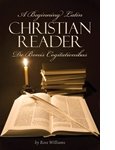
Rose Williams’ new book, whose full title is A Beginning Latin Christian Reader: De Bonis Cogitationibus, is now in print. This graded reader adapts passages from the Bible, Christian fathers, and classical writers by summarizing their content and simplifying the language. However, it contains no religious or philosophical interpretation or commentary of any kind. Such discussion is left to the teacher. It is simply a group of stories arranged around a central theme taken from Philippians 4:8, which exhorts the reader to think on things that are good and honest. Written in classical Latin, this book is designed for students beginning the study of that language.
Each section begins with short quotes from the Bible illustrating the theme of the section, and proceeds to stories that grow longer and more advanced as the book progresses. Illustrative drawings complement the stories. The vocabulary includes a pronunciation guide in the first section, and then, becomes more traditional as the book advances. By Section IV a bullet appears at the end of the base of each word in the vocabulary sections.
Informative sections written in English provide background information as needed. What I particularly liked was the way biblical stories were juxtaposed with classical ones. For example, in Section VI, the story of Moses’ mother was followed by Quintilian’s story of Cornelia, the mother of the Gracchi. An English section about Cornelia and the sources for her story followed the story of Moses’ mother and preceded the one about Cornelia herself.
A full glossary and grammar explanations designed to aid reader comprehension are presented in separate sections at the back of the book.
A teacher's guide is available.
Lesson Plans from the Author
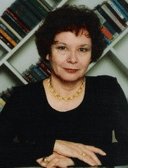 When I asked Rose Williams, veteran master teacher as well as prolific author, to explain how she would use this book in class, this is what she wrote. When I asked Rose Williams, veteran master teacher as well as prolific author, to explain how she would use this book in class, this is what she wrote.
The stories in my newest book are designed to work with any of several approaches to teaching the Latin language.
The first quote in the book is as follows:
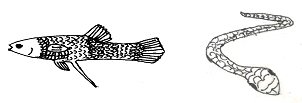
Animālia
Adapted from Matthew 7:10
Pater bona dat.
Datne pater vīperam sī fīlius piscem quaerit?
NB: These are the original drawings; the ones in the book are a bit more sophisticated.
The Reading Method
Possible procedure:
The teacher may give simple questions and answers, such as
Quid pater dat? bona
Quid filius quaerit? piscem
Datne pater viperam? Pater non dat.
Step 1 Question and answer read aloud by the teacher.
Step 2 Both are repeated by the students.
Step 3 Question asked by teacher; students give answer.
More Traditional Method
Use the same general reading strategy as above. However, the teacher might want to lead the students through most or all of Section I, which includes three short quotes and a very short story, perhaps consulting the vocabulary list as words are met in the story, or after reading each quote. English derivatives, which will help students fix vocabulary in their heads and increase students' English vocabulary, may be given by the teacher and suggestions for more possible derivatives may be solicited from students. Dictation of the Latin quotes is also recommended.
Still More Traditional Method
Teachers may wish to begin with the steps mentioned above and then consult Appendix II, which deals with beginning grammar topics such as subjects and direct objects.
Next the students may be asked to write the sentences in Latin and in English.
Supplementary sentences to be translated may be given.
E.g., Read and translate into English:
1. Filius non viperam quaerit.
Translate into Latin:
1. The son asks for a fish.
This little reader can be used to supplement all types of Latin classes and beginning texts.
Rose Williams |
|
What’s in a Name? A Name is a Name.
Classical Mythology is full of brainteasers, especially names that bewilder the beginner. Ask your students to find more of these; yes, there are more.
1. Same Name, Different Person:
Maia is the mother of Hermes.
Maia is one of the Pleiades.
Galatea was a sea nymph loved by Polyphemus.
Galatea was a statue carved from ivory by Pygmalion.
2. Name Pronounced the Same, Spelled Differently:
Peleus is the father of Achilles.
Pelias is Jason’s uncle.
3. Name Almost the Same:
Hippolyte, also spelled Hippolyta, was the daughter of Ares and ruler of the Amazons.
Hippolytus was the son of Theseus.
Eris is the goddess of discord.
Eros is another name for Cupid.
Aether was the personification of the upper sky.
Aethra was the mother of Theseus.
4. Too Many Names the Same and Similar:
Argus was the 100 eyed monster.
Argus was the builder of Jason’s ship, named the Argo.
Argus, also spelled Argos, was Odysseus’ dog,
Argus was the oldest son of Phrixus and Chalciope, which was also the name of King Aegeus’ second wife.
Argus was the son of Zeus and Niobe.
Argus was the son of Phineus and Danae. |
|
Latin for the New Millennium Teaching Tip |
In the last issue of eLitterae, I gave a teaching tip for Unit 1 of LNM 1. Here is a teaching tip for LNM 2.
In Chapter 2, students are introduced to the locative case and the use of place where, place to which, and place from which when used with names of cities, towns, and small islands. Instruct the students to write an imaginary itinerary for a trip of their choosing. Like many itineraries, the students may begin each line with primus dies or secundus dies, etc. Much of what the students will write will involve using the locative or place where, place to which, place from which. For example, a student might write across from primus dies, “Hodie Nasburgo discedimus.” (Today we leave from Nashville). Students may look up the names of towns and countries in a Latin-English dictionary. Alternatively many names of cities and countries can be found in LNM 2, especially in Chapter 2.
• The town of Aachen is discussed in the Latin reading on p.18.
• Rome, Athens, and Carthage are used in the Latin examples that explain the locative on p. 27.
• Still more towns are listed in Latin in Exercise 6 on p. 28.
• Additional cities are given in the teaching tip in the LNM 2 Teacher’s Manual on p. 28.
• In the Latin dialogue on p. 29, both cities and countries are mentioned in Latin.
In Chapter 3, purpose clauses are presented. The students may be instructed to take their Chapter 2 itinerary and add to each place on the itinerary why (for what purpose) they want to visit each place. For example, a student may have written on his/her itinerary, “Lutetiam hodie ibo.” The student may now add on to this statement and write, “Lutetiam hodie ibo ut Eiffelianam videam.” |
|
CAAS - Classical Association of the Atlantic States |
|
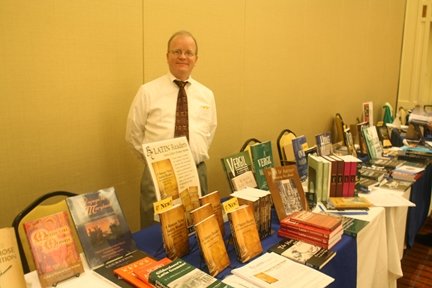
Editor Don Sprague poses at the Bolchazy-Carducci book exhibit at CAAS.
The Newark Airport Hilton saw some 125 or so college and high school classicists gather from October 7–9 for the annual meeting of the Classical Association of the Atlantic States (CAAS). Bolchazy-Carducci's treasures covered four tables in the exhibit hall. While greeting and chatting with teachers at the exhibit was my primary activity, I managed to attend the tail end of “A Musical Evening in Honor of David Porter,” after setting up on Thursday evening. It was great to touch base with David who had served on a panel on teaching AP Latin that I had organized many years ago for the Illinois Classical Conference when David was at Carleton College. Over dinner, we shared our experiences at Williams College, my alma mater, and where he taught for nine years including a student of mine. It was a genuine honor to be present for David’s Ovatio and inspirational to hear him, now in his 70's, speak so enthusiastically of his love of teaching. We also talked about Latin for the New Millennium, which is the text at Skidmore.
Over Saturday breakfast, I met Hans-Friedrich Mueller and thoroughly enjoyed his insights on teaching classics. Having taught both high school and college, Hans is a perfect choice for authoring Bolchazy-Carducci's forthcoming Caesar text for the new AP curriculum. He is also coauthoring A Caesar Legamus Transitional Reader with Rose Williams. Saturday morning, I took a break from the exhibit hall to attend part of the Union College panel presentation panel on interdisciplinary outreach and connections entitled “Engineering, Entrepreneurship, Environment, and Ethics in the Classics Curriculum." Hans is the chair of the Classics Department at Union and, in that capacity, has overseen such across-the-curriculum activities.
Other highlights included the lunchtime Ovatio honoring David Murphy, former CAAS president and retired Upper School Head and classics teacher at The Nightingale-Bamford School of New York City. It has been my pleasure and privilege to work as editor with David who coauthored A Horace Legamus Transitional Reader and A Horace Workbook and its teacher's manual. Most recently, David authored the teacher's guide for the Horace Legamus Transitional Reader. The Newark Museum served as host for a Friday visit to its classical collection including a magnificent set of ancient glass. I also enjoyed the special Stickley exhibit. Robert Connor, formerly of Princeton University and now senior advisor to the Teagle Foundation, piqued our moral imagination and literary landscapes with an engaging talk "We Must Call the Classics before a Jury of the Shipwrecked: What Classics Can Do Now." Bob presented several historical examples of a literary masterpiece serving as a transformative moral compass—very thought-provoking, indeed. No CAAS experience is complete without talking with Judy Hallett (former CAAS president and program coordinator) whose omnipresent hand is key to the conference's success. I always enjoy talking with Judy—she's coauthoring the BC Reader on Roman women.
I would be remiss not to mention the sad state of affairs in public education in New Jersey. The New Jersey Classical Association met on Saturday and I spoke with a number of high school Latin teachers. Schools are suffering from the economy. The state has expropriated surplus funds from foresightful districts. Teachers are no longer compensated for teaching a sixth class (yet, many a Latin teacher continues to do so for the sake of their students). In short, the governor has fomented an undeserved distrust of teachers claiming they're over-pensioned, etc. Very sad, very demoralizing. Let us each do our part to ensure that the public is fully informed of the hard work and dedication that our peers bring to their classrooms throughout this country.
Donald E. Sprague
*AP is a registered trademark of the College Entrance Examination Board, which was not involved in the production of, and does not endorse, this product. |
|
OCC - Ohio Classical Conference 2010 |
The Ohio Classical Conference was held in Columbus, Ohio at the invitation of Ohio State University on October 15 and 16. Members presented papers on topics ranging from the teaching of classics to African-Americans in the 19th Century to the Roman navy. The Vergilian Society held its lunch on Friday, where Professor Batstone presented "Speech and the Unconscious in the Aeneid.” The keynote address at the annual banquet was presented by the current president of Kenyon College, S. Georgia Nugent. She had been a classics professor before undertaking administrative endeavors. Her talk was about the U.S. Army Counter-Insurgency Manual and how it could apply to our approach to classics. With the announcement of the cancellation of Latin at SUNY-Albany and the Stanley Fish commentary on the classics, her timing was right to talk about the relevance of the classics. Nugent indicated that students are increasingly viewing education as another consumer good or as vocational training. She outlined how a counter-insurgency mindset could be of use for classicsts. The conference finished up with discussion about the current state of classics and Latin in Ohio.
Peter Sipes |
|
ICC - Illinois Classical Conference |
Congratulations to Liz Skoryi, ICC Treasurer, the recipient of the 2010 Illinois Classical Conference Lifetime Achievement Award. Liz was presented the award at the 2010 Illinois Classical Conference (ICC) held October 15–17 at Knox College in Galesburg, IL.
Allan Bolchazy, Vice President of Bolchazy-Carducci Publishers, attended ICC to exhibit books and to meet the students, teachers, and professors who are using our books in their classrooms. We enjoy meeting you in person, and hearing your feedback and ideas of ways to better meet the demands of today’s classroom. We always invite you to stop at the BCP booth, talk to us, and peruse our books.
It was great to hear a student tell me that he had read A Plautus Reader in his class and found it to be funny. Likewise, hearing one of the presenters tell her audience that she found John Henderson, author of A Plautus Reader, to be “at his best, edgy” is a great compliment.
We also heard concerns from teachers about the upcoming changes in the upcoming AP* curriculum. Bolchazy-Carducci Publishers has three new Caesar texts in the works by Hans–Friedrich Mueller, Debra Nousek, and Rose Williams, and is currently revising our popular Vergil texts by Barbara Weiden Boyd and Katherine Bradley. These texts will be published in time for spring 2012, ready for the 2012–2013 school year and the 2013 AP* exams. While 2012 seems far away, our expert university professors and high school teachers are busy authoring, editing, and reviewing the texts. Rest assured, we will get you advanced information regarding the content, format and pricing of these texts early in 2012 so you can plan your classes and textbook budgets.
ICC is still working out details for the 2011 conference, and is looking forward to their 75th anniversary in 2012.
Allan Bolchazy
*AP is a registered trademark of the College Entrance Examination Board, which is not involved in the production of and does not endorse our products. |
|
CAES - Classical Association of the Empire States |
Dick and Joann Gascoyne (now retired) in the foreground and Hans Mueller (our Caesar author) and his Union College classics colleague Tarik Wareh (left to right) behind the Gascoynes.
Joseph Crisafulli, CAES board member, and David Perry of Rye High School and Middle School on the right.
Lou and Marie Bolchazy of Bolchazy-Carducci Publishers attended the 2010 CAES Conference held at Union College in Schenectady NY from October 21 through October 23. This is a small conference but with an active membership. BCP co-sponsored the president’s reception. Hans-Friedrich Mueller who will be the author of BCP’s forthcoming primary Caesar text and the co-author with Rose Williams of BCP’s forthcoming LEGAMUS transitional Caesar text was the local host and also presented two papers, one on Caesar and one on meeting the needs of Latin teachers at the Union Graduate College.
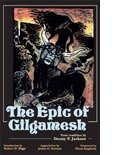 Also presenting was Lou Bolchazy, who gave a talk on “Why Gilgamesh.” We are grateful to Dr Mueller for writing a press release that included the Gilgamesh talk (click here to see press release) that was published in Union College's The Chronicle, thus helping us with the promotion of our Gilgamesh books. In his talk, Lou emphasized that as classicists we seek roots to our Biblical, Graeco-Roman, and current mythology, going beyond the confines of the classical world. Gilgamesh as part of the western comparative mythology forces upon us the question: To what degree must Christians change their definition of inspiration? As human beings we read Gilgamesh because it forces upon us the existentialist question: What is this life all about? Lou’s audience was particularly interested in near Eastern studies. Also presenting was Lou Bolchazy, who gave a talk on “Why Gilgamesh.” We are grateful to Dr Mueller for writing a press release that included the Gilgamesh talk (click here to see press release) that was published in Union College's The Chronicle, thus helping us with the promotion of our Gilgamesh books. In his talk, Lou emphasized that as classicists we seek roots to our Biblical, Graeco-Roman, and current mythology, going beyond the confines of the classical world. Gilgamesh as part of the western comparative mythology forces upon us the question: To what degree must Christians change their definition of inspiration? As human beings we read Gilgamesh because it forces upon us the existentialist question: What is this life all about? Lou’s audience was particularly interested in near Eastern studies.
Popular topics at the conference were reception studies, using electronic media, and the New York State Regents Exams. Regarding the Regents Exams, conferees were distressed that the exams for Latin, German, and Hebrew have been eliminated while the exams for other foreign languages have been retained. The New York State Education Department had sent a representative to respond to the questions and concerns raised. He promised to respond to any question submitted to him in writing with a written response. He made a special point of saying that we teachers must present our case to decision makers. State officials respond to expressed and documented needs.
Marie Bolchazy |
|
|