To receive email from Webmaster,
add webmaster@bolchazy.com to your safe sender list.
View as Web Page Subscribe Send to a Friend
Bolchazy-Carducci Publishers
Share on Facebook Share on Twitter More Share Options

Vol. 1 No. 1, Winter 2011 • Editor: Marie C. Bolchazy, Ed.D.

Little Children Learning Latin Books Teach Pre-Schoolers this Classic Language

Special offers for Homeschool Classical eNewsletter Subscribers

A Roman Map Workbook - Activity

When in Rome - Comics

Latin Network

Artes Latinae Order Form

Congratulations for making it to the Next Level!

eLitterae - Are you receiving it?

Contact Us

Little Children Learning Latin

Books Teach Pre-Schoolers this Classic Language

If you want to cause some excitement at your favorite fast food restaurant, try this: Pull up to the drive-through window and have your kids practice their language skills by ordering chicken fingers and fries in Latin.


Your kids don't know Latin? They're not alone. Too few schools, especially those below college level, teach Latin anymore. Why "too few?" Because, if you want to give your kids an edge, there are few better ways than their learning this "dead" language. Studies conducted by the Educational Testing Service show that Latin students consistently outperform all other students on the verbal portion of the Scholastic Assessment Test (SAT). Other studies indicate that learning Latin increases math skills, too. Sixth-grade students in Indianapolis who studied Latin for 30 minutes each day for five months advanced nine months in their math problem solving abilities.


"I will say at once, quite firmly, that the best grounding for education is the Latin grammar ... Even a rudimentary knowledge of Latin cuts down the labor and pains of learning almost any other subject by at least 50 percent," says British novelist, essayist and scholar Dorothy Sayers.


That may well be, but how can you make Latin interesting for your children? A good place to start is the new series of children's books by Marie Carducci Bolchazy. There are four books in the series: Quot Animalia? (How Many Animals?) and Quid Edam? (What Will I Eat?), Quis me amat? (Who Loves Me?) and Quo Colore est? (What Color Is It?)


These I Am Reading Latin books are created for children 4 to 8 years old but will delight the kid in every reader. All have charming illustrations (done by talented high school art students) that enhance the simple text, and help readers figure out the vocabulary represented on the page. Translations for each page are at the back of the book as are a pronunciation guide and basic grammar information. Further help with pronunciation is on the publisher's Web site, where readers can hear the book being read in classical Latin.


Quid Edam? covers breakfast, lunch and dinner from a child's perspective, with foods like fish sticks and pancakes. Quot Animalia? teaches kids to count while also learning the names of various animals, from lions to mice. Quis me amat? teaches the names of family members, and Quo Colore est? of course teaches the names of colors.


"These books are educational, but they are also just plain fun," says Bolchazy. "I hope children find them entertaining and useful, but I think adults will enjoy them as well," she adds. After all, who can resist a book that provides Latin translations for macaroni and cheese (collyra cum caseo) and hot dog (hilla calens)?


Bolchazy, an education specialist and co-owner with her husband of Bolchazy-Carducci Publishers, decided to develop the children's books after repeated customer requests for primary-level Latin books. "It is important to teach languages to children as early as possible," says Bolchazy. "The older they are when they begin to study foreign languages, the harder it is."


Latin builds a solid base for the acquisition of other languages as well. A knowledge of Latin provides a foundation of about 80 percent of the vocabulary of the Romance languages (French, Portuguese, Romanian and Spanish). About 723 million people in 57 countries speak these languages: Spanish is the official language of 20 nations and French the official language of 27 others. Latin is essential for understanding the key documents of the Western world. It is a cultural link that binds Europe and America.


Latin also helps develop students' reading, writing and speaking in English. Their vocabulary is enriched and grammar is sharpened. In Philadelphia, students in the fourth, fifth and sixth grades received 15 to 20 minutes of daily instruction in Latin for one year. The performance of the Latin students was one full year higher on the vocabulary subtest of the Iowa Tests of Basic Skills (ITBS) than the performance of matched control students who had not studied Latin.


Even if all these benefits don't sway you, you'll want the books just for the thrill of being able to say "for breakfast, I choose Mickey Mouse (Michaelis Muris) pancakes," in Latin.


Carpe diem and visit Bolchazy-Carducci Publishers at www. bolchazy.com for more information on the I Am Reading Latin series.


EDITOR'S NOTE: Author Marie Carducci Bolchazy has a doctoral degree in education from the State University of New York at Albany and a master's degree, also in education, from Cornell University. She is co-owner of Bolchazy-Carducci Publishers.


Mardah B.C. Weinfield translated the I Am Reading Latin series. She holds Master of Arts degrees in both Latin and Education. She has been studying and teaching Latin for over 20 years, most recently with her own son William.

Special Offers

Special offers for Homeschool Classical eNewsletter Subscribers

20% off

I Am Reading Latin Series Set

Marie Carducci Bolchazy

4 Paperback Books and CD (2003 and 2004) ISBN  978-0-86516-617-2 $55.00 $44.00


20% off

A Roman Map Workbook and Teacher's Guide

Elizabeth Heimbach

Student Text: viii + 144 pp (2010) ISBN 978-0-86516-726-1 $22.00 $18.00

Teacher's Guide: viii + 86 pp (2011) ISBN 978-0-86516-762-9 $22.00 $18.00


20% off

A Beginning Latin Christian Reader: De Bonis Cogitationibus

Rose Williams

Student Textbook: iv + 84 pp (2010) Paperback ISBN 978-0-86516-750-6 $15.00 $12.00

Teacher's Guide: iv + 33 pp (2010) Paperback ISBN 978-0-86516-763-6 $15.00 $12.00


One copy each, prepaid, no returns, website special not available to distributors. 

Not valid with other discounts. Offer ends January 31, 2011


Monthly Special Offers on www.Bolchazy.com

Enrichment Text and Activities to use with Artes Latinae

A Roman Map Workbook - Activity

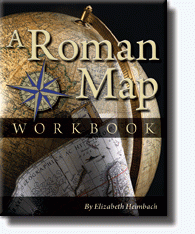
A Roman Map Workbook

by Elizabeth Heimbach

Student Text: viii + 144 pp (2010) Paperback ISBN 978-0-86516-726-1

Teacher's Guide: viii + 86 pp (2011) Paperback ISBN 978-0-86516-762-9


A Roman Map Workbook meets the needs of today’s students and introduces them to the geography of Rome and the Roman world. Veteran high school and college Latin teacher Elizabeth Heimbach provides students, especially those studying Latin, with a thorough grounding in the geography of the Roman world. The workbook walks students through each map, discussing the importance of each place-name, making connections to Roman history and literature. The carefully chosen maps complement subjects and periods covered in the Latin and ancient history classroom.

The teacher's guide has the answers to the workbook exercises and a link to the Roman Map Workbook blog. This blog has additional exercises, printable map downloads of all maps in the book, and interaction with the author, via comments. The link to the Roman Map Workbook blog is only available to teachers or parents who have purchased a copy of the teacher's guide.


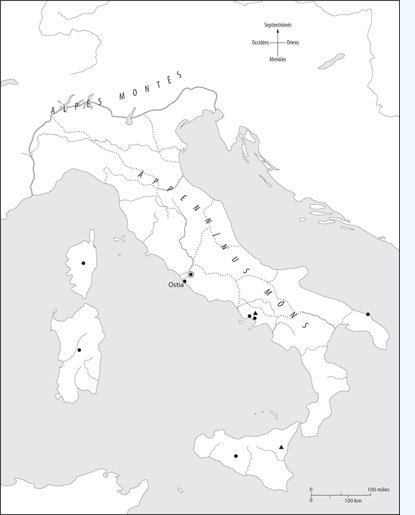
Ancient Italy (pages 6 & 7 from the book) 


Label these sites on this Ancient Italy map, we've helped you out with three of the twelve.


1. Rōma (Rome)


2. Ostia


3. Neāpolis (Naples)


4. Pompēiī


5. Brundisium (Brindisi)


6. Āppennīnus Mōns

(Appenines)


7. Alpēs Montēs (Alps)


8. Vesuvius Mōns (Mt. Vesuvius)


9. Aetna Mōns (Mt. Etna)


10. Corsica


11. Sardinia


12. Sicilia (Sicily)


Download a printable PDF of this activity for your students. Roman Map Workbook Activity page


Answers to Roman Map Workbook Activity (click to download PDF)


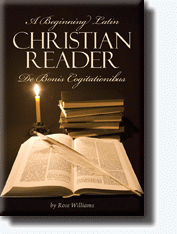
A Beginning Latin Christian Reader

De Bonis Cogitationibus - Activity


Beginning Latin Christian Reader, A

De Bonis Cogitationibus

Rose Williams

Student Textbook: iv + 84 pp (2010) Paperback ISBN 978-0-86516-750-6

Teacher's Guide: iv + 33 pp (2010) Paperback ISBN 978-0-86516-763-6


Master Latin teacher Rose Williams has authored a beginning Latin reader that draws from the Bible and other Christian sources as well as from some ancient Roman sources. The choices all illuminate the book’s central theme, drawn from Philippians 4.8: "Things which are true, things which are honest, things which are just, things which are pure, things which are lovely, things which are of good report; reflect on these things." In the fashion of a graded reader, De Bonis Cogitationibus stories are initially short but gradually grow longer and more involved as the student’s skills as a Latin reader grow. A teacher’s guide is available.


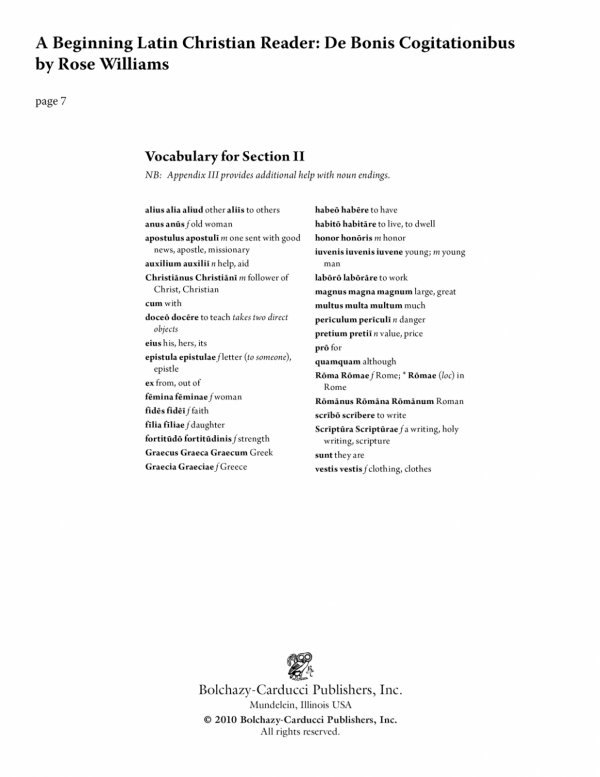
This selection is from Section II of A Beginning Latin Christian Reader; see if you can read the Latin. The accompanying vocabulary will help you. As a last resort, click on the answer key.


(pages 6 & 7 from the book)


Download a printable PDF of this activity for your students. A Beginning Latin Christian Reader Activity page


Answers to A Beginning Latin Christian Reader Activity (click to download PDF)


U.S. Presidents who studied Classical Languages


Many of our presidents studied Latin or Greek. Match up the president with his description. Created by Marie Bolchazy, Bolchazy-Carducci Publishers, Inc., with information from William A. DeGregorio’s The Complete Book of U.S. Presidents.


____ 1. John Adams A. Remained proficient in Latin and Greek all his life and went over the ancient texts again and again.
____ 2. Thomas Jefferson B. He thought that Thucydides’ analysis of the causes of the Peloponnesian War fit the causes of the American War of Independence.
____ 3. John Quincy Adams C. Learned Latin, Greek, French, Italian. Also designed his own home, learned principles of surveying and farming, and much more.
____ 4. William Henry Harrison D. Won the Latin prize while a student at Groton.
____ 5. John K. Polk E. His inaugural address took an hour and forty minutes, probably due to the many references to Roman history. He caught a cold and died a month later.
____ 6. Calvin Coolidge F. Received a classical education at the University of North Carolina and gave an address in Latin at commencement.
____ 7. Franklin D. Roosevelt G. His favorite subjects were history and Latin.
____ 8. Harry S. Truman H. Took Latin but did poorly in it.
____ 9. Gerald R. Ford I. Had to pass exams in Latin composition and Greek translation to enter Bowdoin, and studied the classical languages further as a student there.
____ 10. James Garfield J. Taught classical languages at the Eclectic Institute in Hiram Ohio for a year.
____ 11. Franklin Pierce K. Mastered Latin, Greek, French, and Dutch.
____ 12. James Madison

L. Studied modern and ancient languages becoming quite proficient in Greek.


Other presidents who studied the classics are James Monroe, Andrew Jackson, James Tyler, Warren Harding, James Buchanan, Martin Van Buren, Theodore Roosevelt, and Woodrow Wilson.


Answers to U.S. Presidents who studied Classical Languages (click to download PDF)

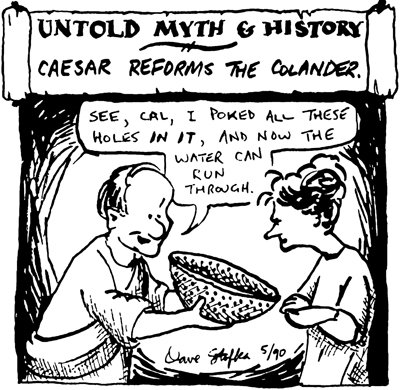
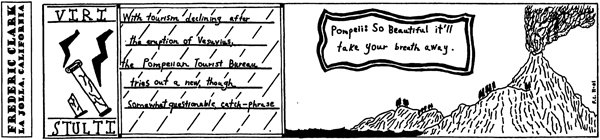
When in Rome - Comics

Comics from When In Rome, Best Cartoons of Pompeiiana Newsletter


Resources and Information

Latin Network

The following people are homeschoolers using Artes Latinae, or Latin teachers or professors who are willing, ready, and happy to discuss Latin in connection with Artes Latinae. Contact them!


Chris Chaikowsky

 (618) 466-5377 

7620 Saturn Drive

 Godfrey, IL 62035


*Dr. Anne H. Groton

 (507) 786-3387 (day/voicemail)

(507) 645-7356 (evening)

St. Olaf College

Northfield, MN 55057

mailto:groton@stolaf.edu

*Jane H. Hall

(804) 435-9467

ACL/NJCL Nat’l Latin Exam

143 Cove Creek Court

White Stone, VA 22578

mailto:jhhall@kadaUero.com


*Kathryn Krug

(270) 384-1053

912 Appen Ave.

Columbia, KY 42728

klkrug@duo-county.com

*Dr. Jeffrey Lyon

Professor of Classics

(808) 987-8080

3030 Lowrey St., Apt 129

Honolulu, HI 96822

kapali.lyon@gmail.com(authored the A/L electronic format)


Charlotte Giebel (585) 235-3422 500 Brooks Ave.  Rochester, NY 14619


*Latin Teachers or Professors


Contact a volunteer if you need help with:

   1) Evaluating Artes Latinae

   2) Problems with grammar

   3) Other questions

   4) Or if you need a pep talk

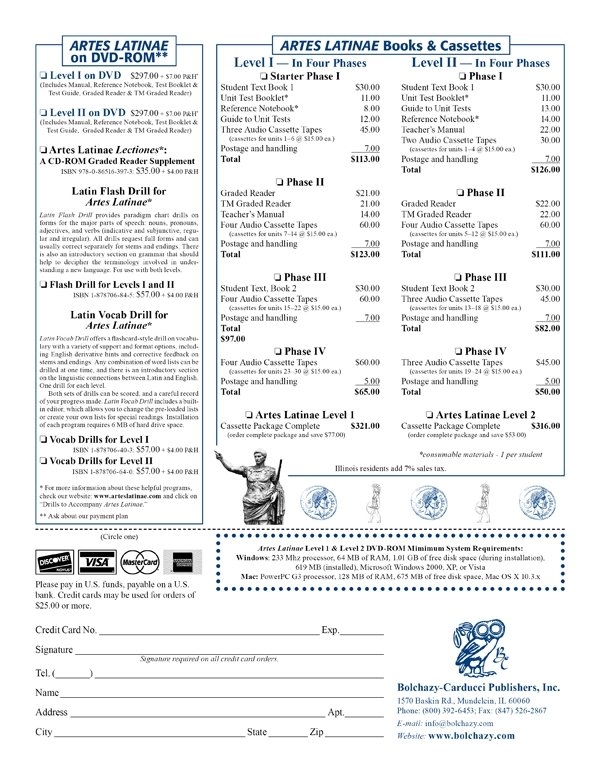
Artes Latinae Order Form


(click here to download this order form)

Congratulations for making it to the Next Level!

"Your Student's Name Here"


We know that there are many Artes Latinae users who deserve congratulations. Please notify us at info@bolchazy.com so that we can send you a certificate and recognize your accomplishment in our next newsletter.


WE WILL BE HAPPY TO SEND A CERTIFICATE AFTER REACHING A BENCHMARK:• Level 1, Units 1 – 15, “Spem Successus Alit”• Level 1, Units 16 – 30, “Divide et Impera” • Level 2, Units 1 – 12, “Virtus et Sapientia”• Level 2, Units 13 – 24, “Ipsa Scientia Potestas Est(completing all levels)


Keep us posted on your progress!

eLitterae - Are you receiving it?

eLitterae is Bolchazy-Carducci Publishers monthly eNewsletter. eLitterae includes: Teaching Tips, Book Reviews, and Special Offers to Subscribers. Click on the "Subscribe" button in this newsletter.

Contact Us

We Welcome your ideas and comments!

 Send us letters at: Bolchazy-Carducci Publishers,

1570 Baskin Road, Mundelein, IL 60060

or

eMail at: info@bolchazy.com


Novus Ordo Seclorum

Let's use this New Year to better order our lives,

so we'll be worthy of His approval:

Annuit Coeptis

Bolchazy-Carducci Publishers • 1570 Baskin Road • Mundelein • IL • 60060

Subscribe | Unsubscribe | Preferences | Send to a Friend | Report Spam
 del.icio.us    Digg    reddit    Facebook    StumbleUpon    Twitter  MySpace