|
|
|
Monthly Farm to School News from Growing Minds
May 2026
|
|
Growing Minds Appreciates YOU!
|
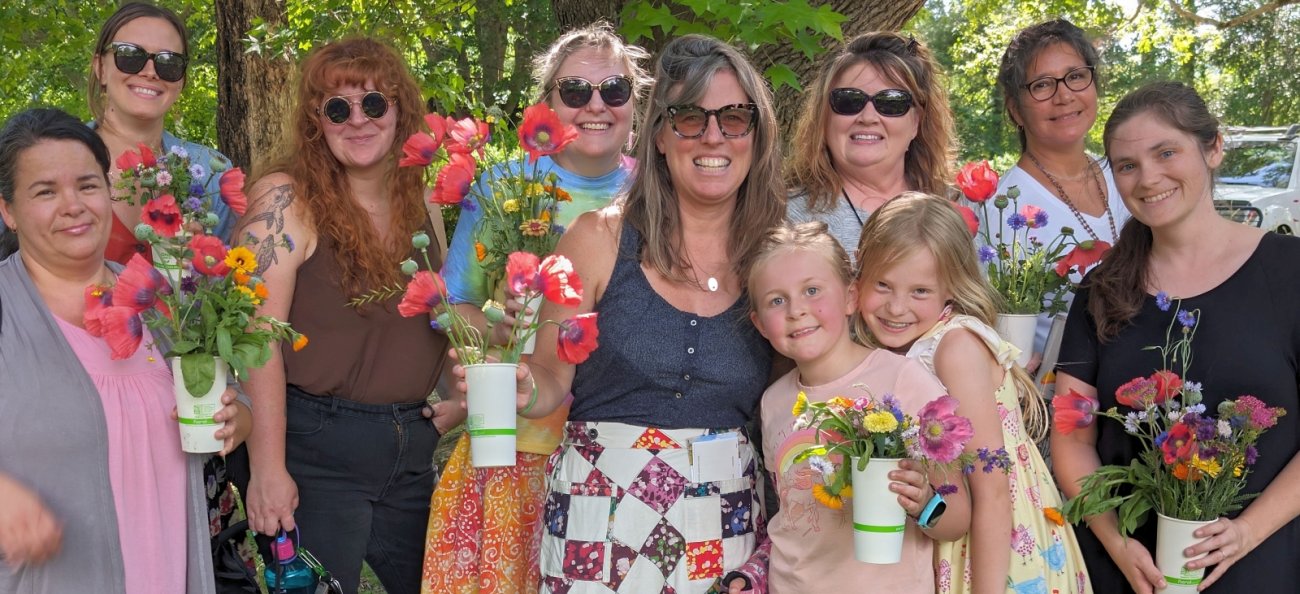
During Teacher Appreciation Month, we would love to give a shout out to all the passionate, dedicated, imaginative school staff out there who bring Farm to School to life! To the teachers who are creating thriving educational spaces for students to learn about local food and farms, we thank you. To the cafeteria and kitchen staff who are sourcing locally to provide nutritious meals for students, we thank you. To the custodians who go above and beyond to help with garden spaces, recycling, and even composting, we thank you. To the bus drivers who put the safety of our children in their hands, we thank you. To the principals, directors, and support staff who are instrumental in creating sustainable Farm to School programs, we thank you. It takes the entire school community to come together to create resilient and healthy students, and we need that now more than ever - so THANK YOU!
|
|
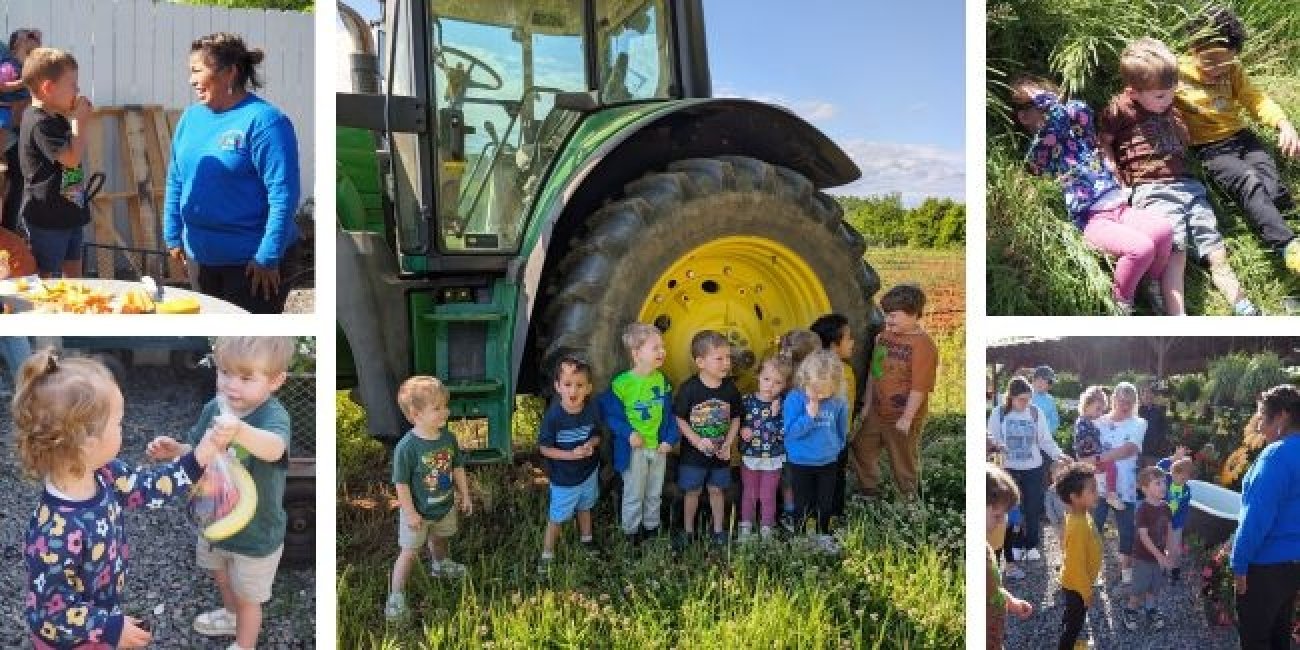
As West Marion Elementary Pre-K staff, children, and families gathered at TC Farms/PG Produce on a cool spring morning, everyone wondered in delight at the possibilities of the day. Ms. Pati, our farm tour guide, took us down and over a path through dew-covered tree limbs. I felt as if we were going through the wardrobe in Narnia. As we came through the trees, our eyes fell upon a glorious sun-filled field, hidden by the world. Children giggled as they ran through the tall grasses, stopping now and again to rest among them. Their eyes widened as they saw a tractor three times their size.
Then we were off to savor the most delicious produce. Some were familiar to us, such as cantaloupe and mangos, but others felt like they were from a distant world. Mamey is a tropical fruit that tastes similar to a sweet potato, and can be eaten raw or blended into smoothies. Chayote squash is a mild and slightly sweet-tasting squash similar to a cucumber in texture, which can be cooked or eaten raw in a salad. As the children enjoyed these new textures and flavors, the sweet juices ran down their faces and hands. It was an experience that tapped into all of our senses - thank you, Ms. Pati.
We are so blessed to have many farms like this in our communities. There is nothing like the taste of a fruit or vegetable in season grown right here. As we take the time to thank our school staff this month, we would also like to thank our farm staff who grow our food. May is blooming with the flavors of the season, so visit a local farm, farm stand, or farmers market near you. Revel in the joy and wonder, just as the children did on our magical adventure.
You can find TC Farms/PG Produce in Marion, NC. Check out how you can have a successful farm field trip with your students and families here or reach out to growingminds@asapconnections.org.
|
|
May marks the start of strawberry season in Western North Carolina! Strawberry plants are members of the rose family, and their flowers are white with a yellow center. The flowers emerge on plants in spring and grow into strawberry fruits covered with external seeds after being pollinated by wind and insects. Visit your local farmers market to buy fresh strawberries, then mix up a batch of springtime strawberry salsa / salas de fresa with your kids! Kids can… help slice up the strawberries, squeeze the limes, and mix together the salsa ingredients.
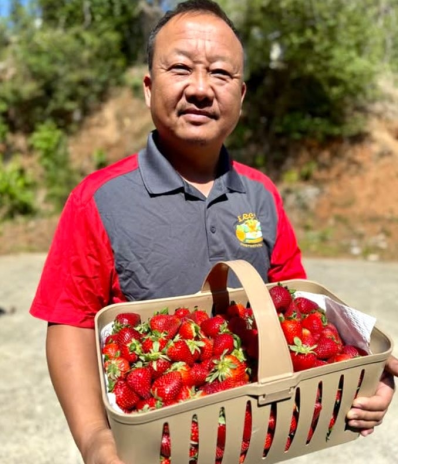 If you’re local to Asheville, visit ASAP’s Asheville City Market where you can find Tou from Lee’s One Fortune Farm (pictured here) selling their sweet strawberries and more. All school employees can redeem a $5 token at the market during Teacher Appreciation Month! If you’re local to Asheville, visit ASAP’s Asheville City Market where you can find Tou from Lee’s One Fortune Farm (pictured here) selling their sweet strawberries and more. All school employees can redeem a $5 token at the market during Teacher Appreciation Month!
Many farmers markets accept SNAP/EBT, and some offer programs such as Double SNAP or Double Up Food Bucks. In addition, this summer school-aged children and their families will be receiving SUN Bucks, also referred to as Summer SNAP/EBT. Please share this SUN Bucks flyer (available in English and Spanish) with families and let them know their benefits can be used at their local farmers market!
|
|
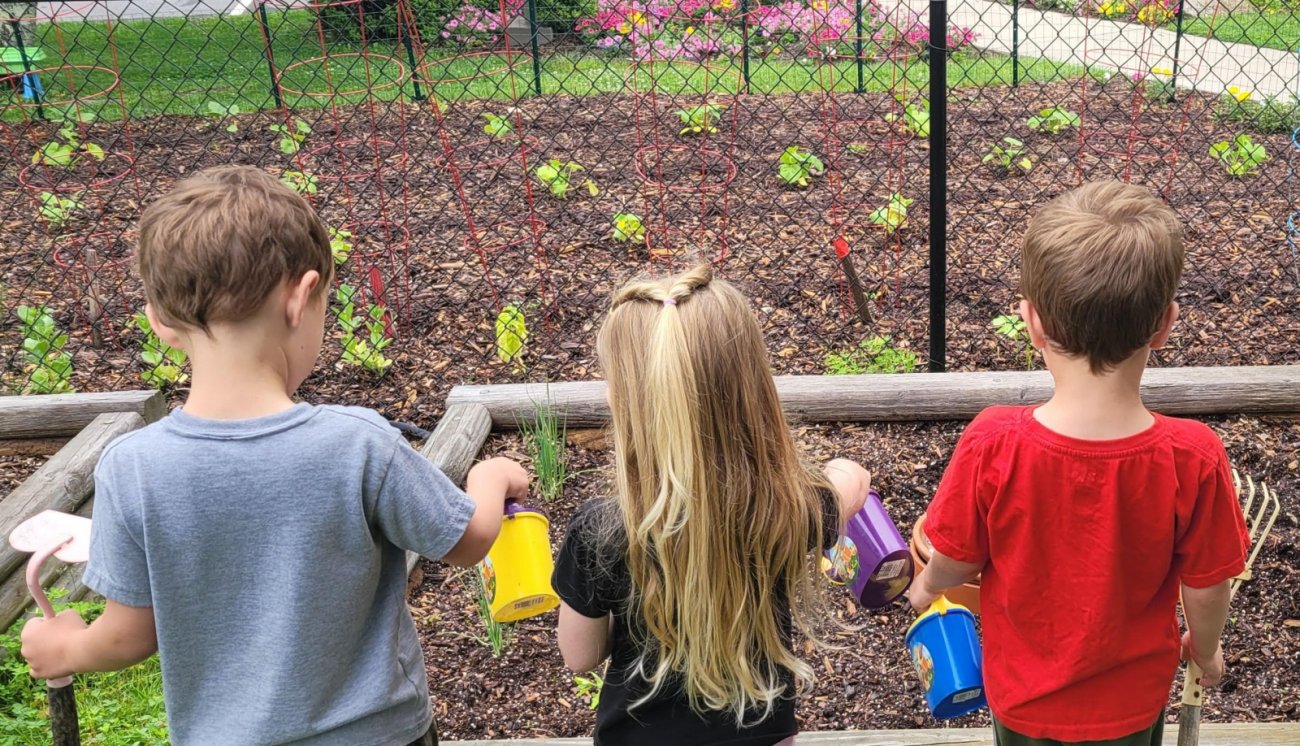
As spring gardens are sprouting up in our region and across the state, which is still dealing with extreme drought conditions, we look to water-wise gardening for some guidance.
Broken Ground suggests “watering less frequently and more deeply, preferably in the morning, rather than daily for short periods of time. If you water your garden daily, the plant roots stay at the surface. If you water less frequently, the plant roots will grow down, searching for water, creating a more robust root system and a healthier plant. A finger test means that you stick your index finger in the soil, up to the knuckle. If the soil feels moist, then there is no need to water.”
Gardener’s Supply Company offers eight steps to a water-wise garden.
NC Cooperative Extension are urging gardeners to adapt as drought conditions persist.
Watering the Garden Lesson Plan - Students will learn how to determine if gardens need to be watered by exploring dry and wet soil.
Becoming a water-wise gardener not only provides your garden with the correct moisture it needs to flourish, you are helping our environment thrive during this time of drought.
|
|
ASAP’s Local Food Guide, the annual free publication for finding local food and farms, is updated for the 2026–27 season. This definitive resource lists hundreds of Appalachian Grown certified farms, farmers markets, restaurants, groceries, artisan producers, and more throughout Western North Carolina and surrounding counties in Virginia, Tennessee, Georgia, and South Carolina. A digital version of the print Guide may be viewed at asapconnections.org/guide.
Sprouting School Gardens Grant
Deadline: June 1, 2026
This grant brings hands-on learning and nutrition education to life by supporting school gardens and classroom cooking programs.Grants are up to $5,000 and support school-garden program operations, program supplies, and educator stipends. Learn more and apply here.
Free Seeds and Books from Growing Minds
Seeds from our partners at Sow True Seed are available for FREE for school gardens located in ASAP's Appalachian Grown region. In addition, educators in the region are welcome to borrow any of the books featured in our database through the Growing Minds Lending Library.
Educators can contact Growing Minds staff at growingminds@asapconnections.org or 828-236-1282 to schedule a time to pick up items from the ASAP office in Asheville.
|
|
|
Our office is located at 306 West Haywood Street, Asheville, NC 28801. We are open to the public Tuesday through Thursday from 9am to 5 pm. Call 828-236-1282 or email
Growing Minds is a program of ASAP (Appalachian Sustainable Agriculture Project). ASAP's mission is to help local farms thrive, link farmers to markets and supporters, and build healthy communities through connections to local food.
|
|
|
|
|
|
|
|